Rhetoric Timeline

Patterns of escalation, threat, and diplomacy — grouped by narrative arc. Each entry links to its source events.

May 2026
US President Donald Trump and Chinese President Xi Jinping walk the centuries-old gardens of Zhongnanhai on May 15, 2026 — Day 77 of the Iran war — as the two-day Beijing summit concluded without an Iran breakthrough, Beijing and Washington releasing contradictory readouts, and Trump telling Fox News he was "running out of patience" with Iran. (AP / Al Jazeera)
Diplomatic EscalationMay 15 – May 15, 2026De-escalation

The Summit That Agreed on Everything and Changed Nothing: Trump Departs Beijing Without an Iran Deal as Washington and Beijing Issue Contradictory Readouts

The two-day Trump-Xi summit in Beijing concluded on May 15, 2026 — Day 77 of the Iran War — with both sides declaring success and releasing readouts that disagreed on the conflict's most consequential question.

United StatesDonald TrumpXi JinpingMarco RubioScott BessentPete HegsethElon MuskTim CookJensen Huang
Read full analysis
US President Donald Trump and Chinese President Xi Jinping walk the centuries-old gardens of Zhongnanhai on May 15, 2026 — Day 77 of the Iran war — as the two-day Beijing summit concluded without an Iran breakthrough, Beijing and Washington releasing contradictory readouts, and Trump telling Fox News he was "running out of patience" with Iran. (AP / Al Jazeera)
Diplomatic EscalationMay 15 – May 15, 2026ContinuationKey moment

Unmasking the Accomplice: Araghchi Names UAE as Co-Belligerent at BRICS While Trump Calls Iran's Uranium Hunt 'Just PR'

Day 77 of the Iran War — May 15, 2026 — produced two disclosures that fundamentally altered the diplomatic terrain of the conflict: Iran's foreign minister publicly named the UAE as a direct participant in the war against his country, and the US president signalled that the uranium demand at the centre of his own ceasefire proposal was primarily a public-relations requirement.

IranAbbas AraghchiKhalifa Shaheen Al MararSergei LavrovS. JaishankarDonald TrumpSean HannityNaim Qassem
Read full analysis
Chinese President Xi Jinping and US President Donald Trump shake hands at the Great Hall of the People in Beijing on May 14, 2026 — Day 76 of the Iran war — as the two leaders agreed that the Strait of Hormuz "must remain open" and Iran "can never have a nuclear weapon," while Lebanon-Israel peace talks opened simultaneously in Washington ahead of a Sunday ceasefire deadline. (AP / Al Jazeera)
Diplomatic EscalationMay 14 – May 14, 2026ContinuationKey moment

Words Without Roadmap: Trump and Xi Agree Hormuz 'Must Remain Open' — Then Rubio Says Washington Isn't Asking Beijing for Anything

Day 76 of the Iran War — May 14, 2026 — produced the most consequential joint US-China statement of the conflict, and the most immediate disavowal of its own significance.

United StatesDonald TrumpXi JinpingMarco RubioPete HegsethScott BessentElon MuskTim CookJensen HuangSimon KaramYossi DrazninNawaf SalamNaim Qassem
Read full analysis
Cargo ships stranded near the Strait of Hormuz as President Trump arrived in Beijing on May 13, 2026 — Day 75 of the Iran war — for a high-stakes summit with Xi Jinping. US intelligence revealed Iran retains 70% of its prewar missile stockpile and 30 of 33 Hormuz missile sites are operational. Kuwait arrested four alleged IRGC operatives. Iran's Army banned US weapons from transiting the strait. (AP / Al Jazeera)
Diplomatic EscalationMay 13 – May 13, 2026ContinuationKey moment

Beijing Gambit, Day Two: Trump Arrives in China as Intel Reveals Iran's Missiles Are Intact, Gulf States Crack, and Hormuz Remains Closed

Day 75 of the Iran War — May 13, 2026 — produced the most strategically significant intelligence disclosure of the conflict: classified US assessments revealed that Iran retains approximately 70% of its prewar missile stockpile, that 30 of 33 Hormuz missile sites are "partially or fully operational," and that roughly 90% of Iran's underground storage and launch infrastructure has been restored. The findings directly contradicted months of public assurances from President Trump and Defense Secretary Hegseth that Iran's military was "decimated" and "no longer a threat." Against this backdrop, Trump landed in Beijing for a high-stakes summit with Xi Jinping — the first US state visit to China in nearly a decade — warning Iran before departure: "They'll either do the right thing, or we'll finish the job."

United StatesDonald TrumpXi JinpingHan ZhengMohammad AkraminiaMohammad Bagher GhalibafSheikh Mohammed bin Abdulrahman Al ThaniAbbas BaqerpourBadr al-BusaidiNaim QassemPete HegsethMarco RubioTim CookElon MuskJensen Huang
Read full analysis
Cargo ships stranded near the Strait of Hormuz on May 12, 2026 — Day 74 of the Iran war — as Trump departed for China with the conflict unresolved, sources said he was "more seriously" considering a combat restart, and the US sanctioned 12 entities for facilitating Iranian oil sales to China. Beijing invoked its "blocking rule" in unprecedented defiance of US secondary sanctions. (AP / Al Jazeera)
Diplomatic EscalationMay 12 – May 12, 2026EscalationKey moment

Beijing Gambit: Trump Flies to China with the Iran War Unsettled, Sources Say He's Weighing a Combat Restart, and Beijing Defies Washington's Sanctions for the First Time

Day 74 of the Iran War — May 12, 2026 — crystallised a paradox that had been building since the ceasefire: the closer Trump flew to Beijing, the further Washington and Tehran were from peace.

United StatesDonald TrumpXi JinpingPete HegsethDan CaineMohammad Bagher GhalibafKazem GharibabadiJohn HealeyCatherine VautrinJules W. Hurst IIIIDF Golani Brigade
Read full analysis
Cargo ships idle near the Strait of Hormuz on May 11, 2026 — Day 73 of the Iran war — as Trump declared the ceasefire on "massive life support" and Iran vowed it would "never bow." Oil prices surged above $4/barrel, Qatar reported a drone strike on a cargo ship in its waters, and Kuwait scrambled air defenses against Iranian drones entering its airspace. (AP / Al Jazeera)
Diplomatic EscalationMay 11 – May 11, 2026EscalationKey moment

'Never Bow' vs. 'Massive Life Support': Iran Rejects the MOU, Tankers Burn in the Gulf, and the Ceasefire Collapses in All But Name

Days 71 through 73 of the Iran War — May 9–11, 2026 — produced the clearest articulation yet of why this conflict could not end: the two sides did not disagree about details. They disagreed about the fundamental nature of what a settlement would mean.

IranDonald TrumpMasoud PezeshkianBenjamin NetanyahuPete HegsethAbbas AraghchiEsmail BaghaeiIRGC Khatam al-Anbiya HQNaim QassemMohammad Bagher GhalibafScott Bessent
Read full analysis
The Iranian Navy seizes the oil tanker Ocean Koi in the Gulf of Oman on May 8, 2026, escorting it to Iran's southern coast under a Supreme National Security Council judicial order. Iran said the vessel was attempting to disrupt Iranian oil exports. The seizure marked Iran's most assertive maritime action since the April 7 ceasefire. (PressTV)
Military ThreatMay 8 – May 8, 2026EscalationKey moment

'Love Tap' and 'Wish-List': The Ceasefire Survives Its Worst Days as the MOU Stalls, the Strait Burns, and Beirut Is Struck for the First Time Since April

Days 69 and 70 of the Iran War — May 7–8, 2026 — demonstrated what a ceasefire looks like when both sides have concluded it is too useful to abandon and too costly to honour. The Strait of Hormuz saw its most serious naval engagement since April 7: three US Navy destroyers — USS Truxtun, USS Rafael Peralta, and USS Mason — were attacked by Iranian missiles, drones, and fast-attack boats. CENTCOM responded by striking Iranian military facilities at Bandar Abbas and Qeshm Island. Each side accused the other of firing first. Trump called it a "love tap." Iran called it a US ceasefire violation.

IranDonald TrumpMarco RubioAbbas AraghchiEsmail BaghaeiMohammad Bagher GhalibafMasoud PezeshkianMojtaba KhameneiBenjamin NetanyahuIsrael KatzAhmad Ghaleb Balout
Read full analysis
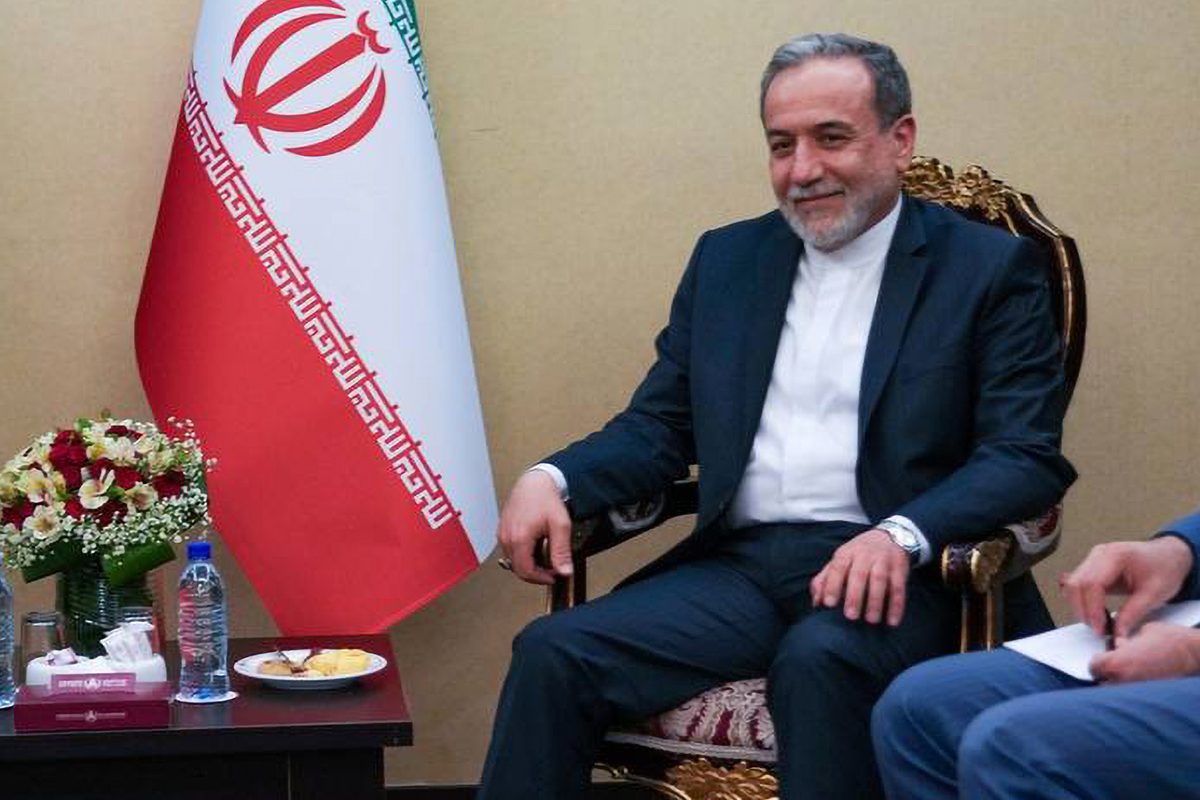
Iranian Foreign Minister Abbas Araghchi (left) meets Chinese Foreign Minister Wang Yi in Beijing on May 6, 2026 — Araghchi's first visit to China since the Iran war began on February 28. China called for a "comprehensive ceasefire" and pledged to play a "greater role" in ending the conflict, one week before Trump was due to meet Xi Jinping. (AP / Al Jazeera)
De-escalationMay 6 – May 6, 2026De-escalationKey moment

The Pivot: Trump Pauses Project Freedom, Warns of Worse Bombing, and Closes in on a One-Page Deal — While China Enters the Arena

May 6, 2026 — Day 68 of the Iran War — was the day the conflict's most improbable dynamic materialised: a US president who had launched a military operation to force open the Strait of Hormuz, watched it trigger two days of Iranian attacks on the UAE, and then paused the entire operation within 36 hours, citing "great progress" toward a deal — while simultaneously threatening to bomb Iran at "a much higher level and intensity than before" if no agreement was reached. The apparent contradiction was in fact a single coherent message: Trump was offering Iran its only viable exit from the war, while demonstrating he was willing to resume escalation the moment Iran refused.

United StatesDonald TrumpMarco RubioSteve WitkoffJared KushnerAbbas AraghchiWang YiXi JinpingEyal ZamirNaim QassemShehbaz SharifPete Hegseth
Read full analysis
Cargo ships at sea in the Gulf of Oman near the Strait of Hormuz, May 1, 2026. On Day 67, the UAE came under Iranian attack for a second consecutive day, the world condemned Iran in near-unanimous terms, and the US ceasefire entered formal ambiguity — with Trump declining to confirm it remained in effect as Lebanon's truce also neared collapse. (AP / Al Jazeera)
Military ThreatMay 5 – May 5, 2026ContinuationKey moment

Project Freedom and the Ceasefire Fiction: Iran Attacks UAE, US Sinks Speedboats, and Two Sides Maintain the Pretence of Peace

The week of May 3–5, 2026 produced the Iran War's most revealing paradox to date: the most intense exchange of fire since the April 8 ceasefire, conducted simultaneously by both sides while both formally maintained the ceasefire remained in effect. The mechanism was Operation Project Freedom — Trump's May 3 announcement that the US military would deploy guided-missile destroyers, more than 100 aircraft, 15,000 service members, and multi-domain unmanned platforms to guide approximately 2,000 stranded commercial vessels out of the Persian Gulf through the Strait of Hormuz. The operation reflected a structural tension that had defined the entire ceasefire period: the United States had accepted a pause in direct bombing of Iran but had not accepted Iran's de facto control of the world's most important oil shipping lane. Iran had accepted a pause in direct retaliation against American forces but had not accepted American military presence in what Tehran characterised as "the new maritime regime of the Strait of Hormuz." Project Freedom forced this contradiction into the open. Iran declared the operation a ceasefire violation before it began. Ebrahim Azizi, chairman of Iran's parliamentary security committee, stated explicitly: "Any American interference in the new maritime regime of the Strait of Hormuz will be considered a violation of the ceasefire." The IRGC's Khatam al-Anbiya headquarters issued a targeting warning against foreign forces approaching the strait. When Project Freedom commenced on May 4 — Day 66 — Iran responded not just in the strait but against the United Arab Emirates, launching 12 ballistic missiles, 3 cruise missiles, and 4 drones at UAE targets in the most significant Iranian strike on Gulf infrastructure since the April 8 ceasefire. The UAE intercepted the vast majority; one drone penetrated and struck the Fujairah Petroleum Industries Zone, sparking a large fire and moderately wounding three Indian nationals. In the strait itself, the US destroyed seven Iranian speedboats and repelled drone and missile attacks; two American-flagged merchant ships successfully completed the transit. Danish shipping giant Maersk confirmed one of its subsidiaries had crossed with escort. CENTCOM reported that USS Truxtun and USS Mason navigated without being struck. Iran claimed a US destroyer had been hit; the Pentagon denied it. The day ended with Trump telling Fox News that Iran would be "blown off the face of the earth" if it continued targeting American ships — the most extreme public warning Trump had issued in the conflict's 66 days — while Defense Secretary Hegseth simultaneously told Congress that "the ceasefire with Iran is not over." General Dan Caine characterised Iran's attacks as "below the threshold of ceasefire termination."

United StatesDonald TrumpPete HegsethDan CaineIRGC Khatam al-Anbiya HQEbrahim AziziAbbas AraghchiMohamed bin ZayedNaim QassemMarco Rubio
Read full analysis
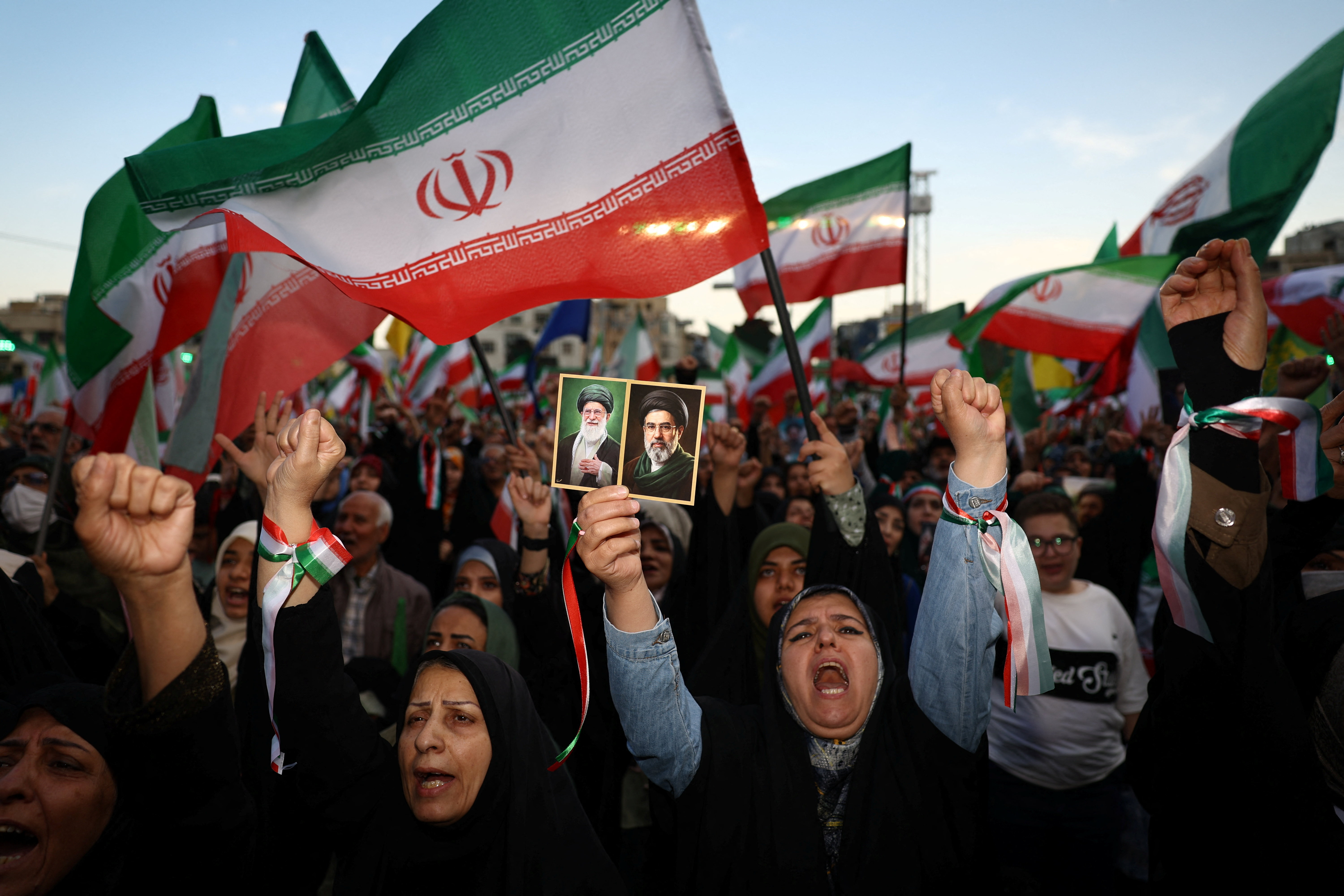
People chant during a rally in Tehran, Iran. Tehran submitted a 14-point peace plan on May 1–2 calling for a complete end to the war in 30 days, deferring nuclear talks to a separate negotiation phase, as the IRGC warned it remained "fully prepared" to resume full operations if diplomacy failed. (Reuters / Al Jazeera)
De-escalationMay 3 – May 3, 2026De-escalationKey moment

Iran's Most Detailed Peace Offer: Why Trump Rejected the 14-Point Plan and What It Reveals About the War's Diplomatic Dead End

On May 1–2, 2026 — Days 63 and 64 of the Iran War — Tehran submitted the most structured peace proposal of the conflict: a 14-point plan, delivered through Pakistani intermediaries in formal response to a US nine-point framework, that attempted to resequence the entire negotiation architecture. The plan's strategic logic was transparent: Iran could not survive indefinite economic strangulation under the dual blockade, but it equally could not accept permanent nuclear renunciation as a precondition to ending the war. The 14-point plan therefore proposed separating the war's end from the nuclear question — ending hostilities first, resolving the Hormuz shipping crisis, lifting the blockade and sanctions, then addressing nuclear enrichment in a separate, later negotiation. The three-phase structure was specific: Phase One would produce a mutual nonaggression pact among Iran, the US, and Israel; the gradual reopening of the Strait of Hormuz with Iran managing mine clearance; and the lifting of the US blockade. Phase Two would impose a 15-year freeze on uranium enrichment — Iran's most concrete nuclear concession in the entire conflict — after which enrichment would resume at NPT-compliant 3.6%. Phase Three would open a strategic dialogue between Iran and Arab Gulf states to build a new Middle East security architecture. The 30-day timeline was Iran's signal that it was not seeking another temporary ceasefire extension but a permanent settlement that compressed the entire diplomatic calendar into a single month. Additional demands — reparations, release of frozen assets, sanctions removal, US force withdrawal from Iran's periphery, end to fighting in Lebanon — reflected the full scope of Iranian grievances from the conflict's 63 days.

IranAbbas AraghchiDonald TrumpMarco RubioKazem GharibabadiEbrahim AziziIRGCPakistan Foreign Office
Read full analysis
April 2026
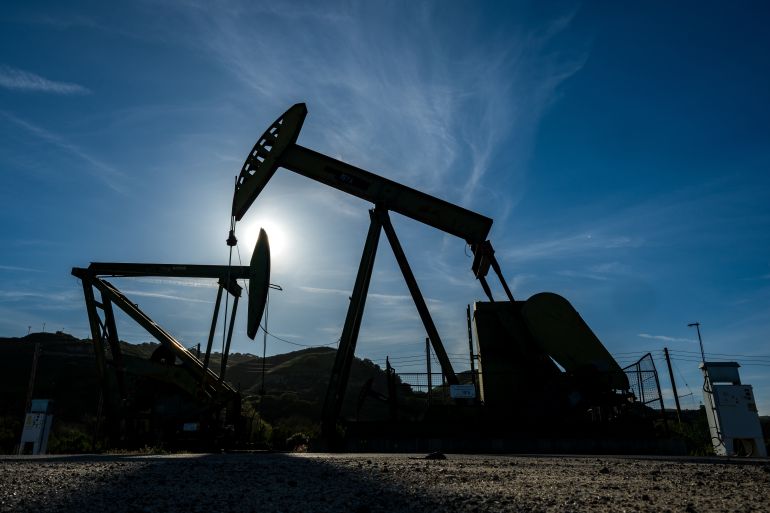
Oil wells at the San Ardo oilfield in California, March 2026. Brent crude briefly surged to $126 per barrel on April 30 — a four-year high — as the dual Strait of Hormuz blockade entered its 17th day and Trump told Iran to "cry uncle." (AP / Al Jazeera)
Military ThreatApr 30 – Apr 30, 2026EscalationKey moment

'Cry Uncle': Trump Doubles Down on Iran Blockade as Oil Hits $126 and Congress Demands Answers

April 30, 2026 — Day 62 of the US-led war on Iran — was the day Trump's war management crystallised into a single phrase. Writing on Truth Social and speaking to Axios, Trump declared the US naval blockade "a complete success" and urged Iran to "just give up" and "cry uncle." His Axios interview went further: "The blockade is somewhat more effective than the bombing. They are choking like a stuffed pig. And it is going to be worse for them. They can't have a nuclear weapon." Within hours he shared a modified map on social media renaming the Strait of Hormuz the "Strait of Trump." The theatrics masked a serious strategic problem: oil had risen for eight consecutive days heading into April 30, briefly touching $126 per barrel — its highest level since 2022 and a 40% increase from pre-war prices. Goldman Sachs estimated that Hormuz exports had fallen to just 4% of normal levels. US average gasoline prices hit $4.30 per gallon nationally, with NBC reporting a single-day jump to $4.39 — the largest one-day spike since the April 7 ceasefire. The European Central Bank warned that energy-intensive economies faced a high risk of technical recession if the blockade persisted through the summer. Goldman Sachs raised its 2026 PCE inflation forecasts accordingly. The immediate trigger for the April 30 price spike was Trump's public rejection of Iran's latest diplomatic overture: through Pakistani intermediaries, Tehran had proposed reopening the Strait of Hormuz and agreeing to a long-term ceasefire if the US lifted its naval blockade of Iranian ports, with nuclear programme talks explicitly deferred to a later, separate process. Secretary of State Marco Rubio called the proposal "unacceptable." Trump told Axios he would not accept any deal that postponed the nuclear file, insisting that lifting the blockade without resolving Iran's nuclear programme would surrender the only leverage Washington still held. US Central Command had also quietly prepared a plan for a "short and powerful" new wave of airstrikes on Iran — a "blockade-plus" option Trump indicated he was willing to hear — alarming European capitals that had been pressing urgently for a diplomatic off-ramp. Iran's parliamentary speaker Mohammad Bagher Ghalibaf mocked the strategy from Tehran, arguing that the surge in global oil prices was proof the blockade was backfiring on Western economies at least as much as it was hurting Iran. With Pakistan's mediation channel dormant and no direct US-Iran talks scheduled, Day 62 ended with the gap between the two sides as wide as it had been on Day 1.

United StatesDonald TrumpPete HegsethMarco RubioMohammad Bagher GhalibafAbbas AraghchiJD VanceDan Caine
Read full analysis
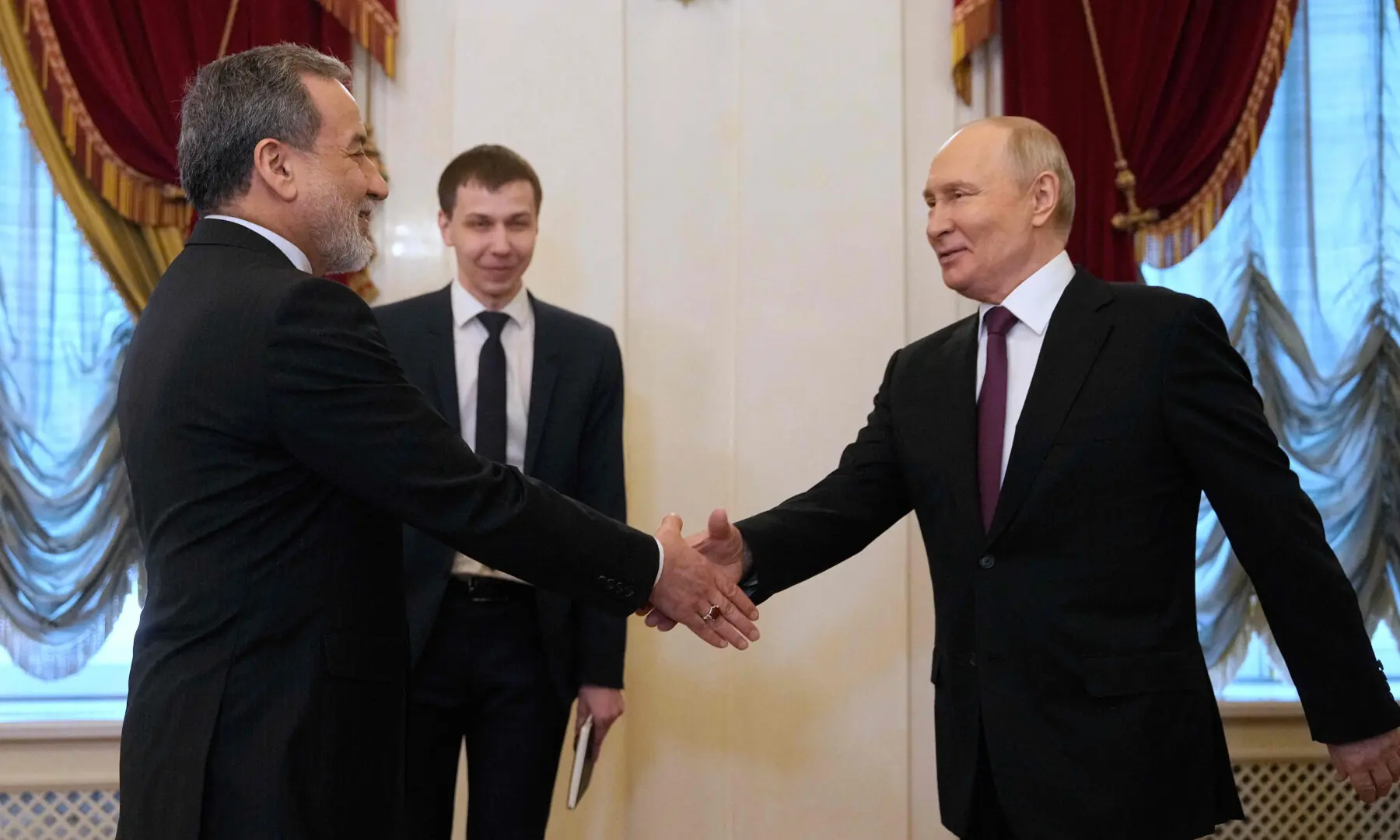
Russian President Vladimir Putin shakes hands with Iranian Foreign Minister Abbas Araghchi at the Boris Yeltsin Presidential Library in St. Petersburg on April 27, 2026, as Moscow reaffirms its strategic partnership with Tehran amid stalled US-Iran ceasefire negotiations. (AFP / Dawn)
Diplomatic EscalationApr 27 – Apr 27, 2026EscalationKey moment

Iran Erects a Nuclear Firewall: Separating Hormuz from the Bomb to Survive the War Without Surrendering Its Strategic Core

On Day 59 of the US-led war on Iran, Tehran unveiled its most calculated diplomatic gambit since the conflict began. Through Pakistani intermediaries, Iranian Foreign Minister Abbas Araghchi transmitted a formal written three-phase proposal to the United States on April 25–27, 2026. The structure was explicit and the sequencing mandatory: Phase 1 demanded a full cessation of hostilities and binding guarantees against renewed US and Israeli attacks on Iran and Lebanon; Phase 2 called for Iran to reopen the Strait of Hormuz to all commercial traffic in exchange for the US lifting its naval blockade of Iranian ports; Phase 3 — nuclear programme talks — would begin only after Phases 1 and 2 were fully completed. Araghchi's team stated Iran "will not engage in nuclear talks until progress is made in the earlier stages." The Institute for the Study of War assessed the proposal directly: "Iran appears to be attempting to exploit its leverage over the Strait of Hormuz to end the war in a way that removes the US blockade of Iranian ports without Iran having to make nuclear concessions." The strategic logic drew on the collapse of the 2015 JCPOA — when Trump withdrew in 2018, Iran was left without a guarantor capable of holding Washington to its commitments. Araghchi's multi-capital circuit — Islamabad, Muscat, Moscow — was explicitly aimed at building diplomatic insulation before any nuclear concessions were tabled. Underpinning Iran's Hormuz leverage was an already-functioning toll architecture: since mid-March 2026 the IRGC had been redirecting ships into a 20-mile corridor between Qeshm and Larak islands near Bandar Abbas, entirely inside Iranian territorial waters, under IRGC escort, charging approximately $2 million per very large crude carrier, with payment accepted in Chinese yuan and cryptocurrency. Iran's parliament approved the "Strait of Hormuz Management Plan" through its National Security Committee on March 31 and advanced it to a full parliamentary vote; Deputy Speaker Hamidreza Hajibabaei confirmed the "first revenue" had been "deposited into the Central Bank account" as of April 23. Analysts described the proposal as a "sovereignty trap" for Washington: accepting Phase 1 without nuclear preconditions would implicitly validate this toll architecture as a permanent institutional fact. Iran's economic desperation gave the strategy its urgency. The US blockade had collapsed Iranian crude and condensate exports from 2.1 million barrels per day before April 13 to approximately 567,000 barrels per day by April 23, according to Kpler data. Onshore storage had swelled to approximately 49 million barrels against total capacity of 86–95 million barrels; analysts projected Iran would reach "tank tops" as early as mid-May, forcing production cuts of up to 1.5 million barrels per day. Iran reportedly had only 12 to 22 days of unused storage remaining — making removal of the US port blockade an existential economic priority, and the nuclear firewall strategy less a strategic luxury than a survival calculation.

IranAbbas AraghchiMasoud PezeshkianMojtaba KhameneiAhmad VahidiMarco RubioDonald TrumpVladimir PutinSultan Haitham bin Tariq
Read full analysis
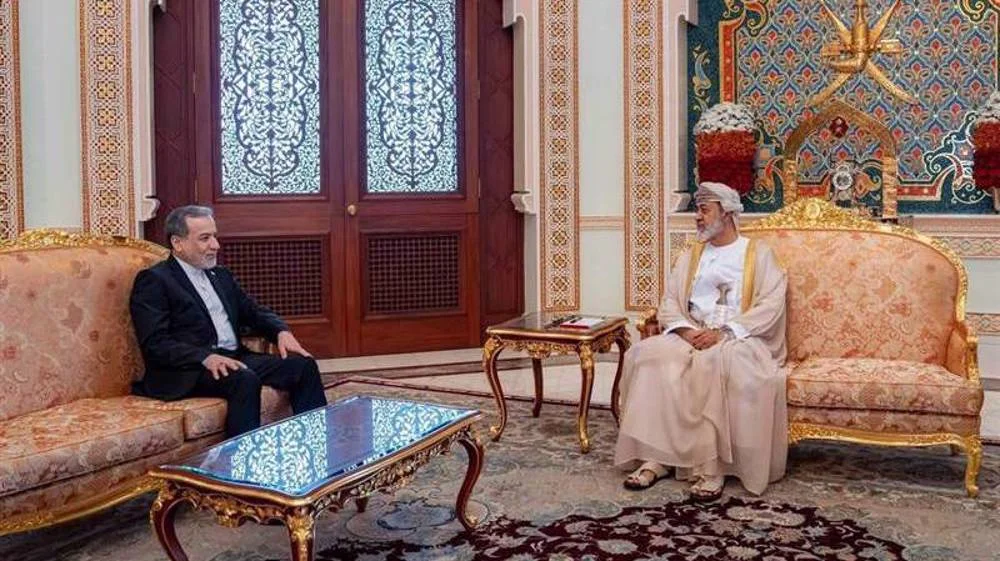
Iranian Foreign Minister Abbas Araghchi meets Oman's Sultan Haitham bin Tariq at al-Baraka Palace in Muscat on April 26, 2026, in his first Gulf visit since the Iran War began — focusing on Hormuz mediation and a proposed toll mechanism. (PressTV / Iranian Foreign Ministry)
De-escalationApr 25 – Apr 26, 2026De-escalationKey moment

Iran's Hormuz Toll Gambit: Araghchi's Oman-Pakistan-Moscow Circuit Signals Tehran Is Building Leverage, Not Capitulating

April 26, 2026 — Day 58 of the war — opened with the Islamabad diplomatic track in ruins. The previous day, Trump had cancelled Steve Witkoff and Jared Kushner's 18-hour flight to Pakistan in real time after Iranian Foreign Minister Abbas Araghchi arrived in Islamabad, held bilateral meetings with Pakistani officials, and departed for Muscat without ever sitting across a table from a US representative. Rather than retreat, Araghchi mounted a deliberate multi-capital circuit designed to project Iran as an active diplomatic actor accumulating external leverage — not a state under siege awaiting American terms. The centrepiece of Day 58 was Muscat. At al-Baraka Palace, Araghchi met Oman's Sultan Haitham bin Tariq in Iran's first Gulf ministerial visit since the war began on February 28. The agenda's most consequential element was a proposed Hormuz toll-collection mechanism: approximately $1–2 million per very large crude carrier, or $1 per barrel in cryptocurrency equivalent, to be levied on all commercial vessels transiting the strait under IRGC escort through a designated 20-mile corridor between Qeshm and Larak islands inside Iranian territorial waters. The proposal was framed not as extortion but as a regional revenue-sharing framework, with Oman positioned as a potential co-administrator — a move calculated to give Gulf states a direct financial stake in legitimising Iranian management of the strait rather than aligning with the US blockade against it. The framing mattered strategically: by offering Oman a share of toll revenues and a formal oversight role, Tehran was attempting to convert a bilateral Iran-US standoff into a multilateral architecture in which neutral Gulf states had an economic interest in the toll system's survival. This was not a new improvisation. Iran's parliament had approved the "Strait of Hormuz Management Plan" through its National Security Committee on March 31 and advanced it to a full parliamentary vote; Deputy Speaker Hamidreza Hajibabaei had confirmed the first toll revenues were deposited into the Central Bank account as of April 23. The IRGC corridor had been operational since mid-March. What Araghchi brought to Muscat was the diplomatic superstructure for an already-functioning economic institution — the pitch to Oman was not a hypothetical but an invitation to co-administer a system already generating revenue.

IranAbbas AraghchiSultan Haitham bin TariqVladimir PutinSergei LavrovMasoud PezeshkianShehbaz SharifAsim MunirSteve WitkoffJared KushnerDonald Trump
Read full analysis
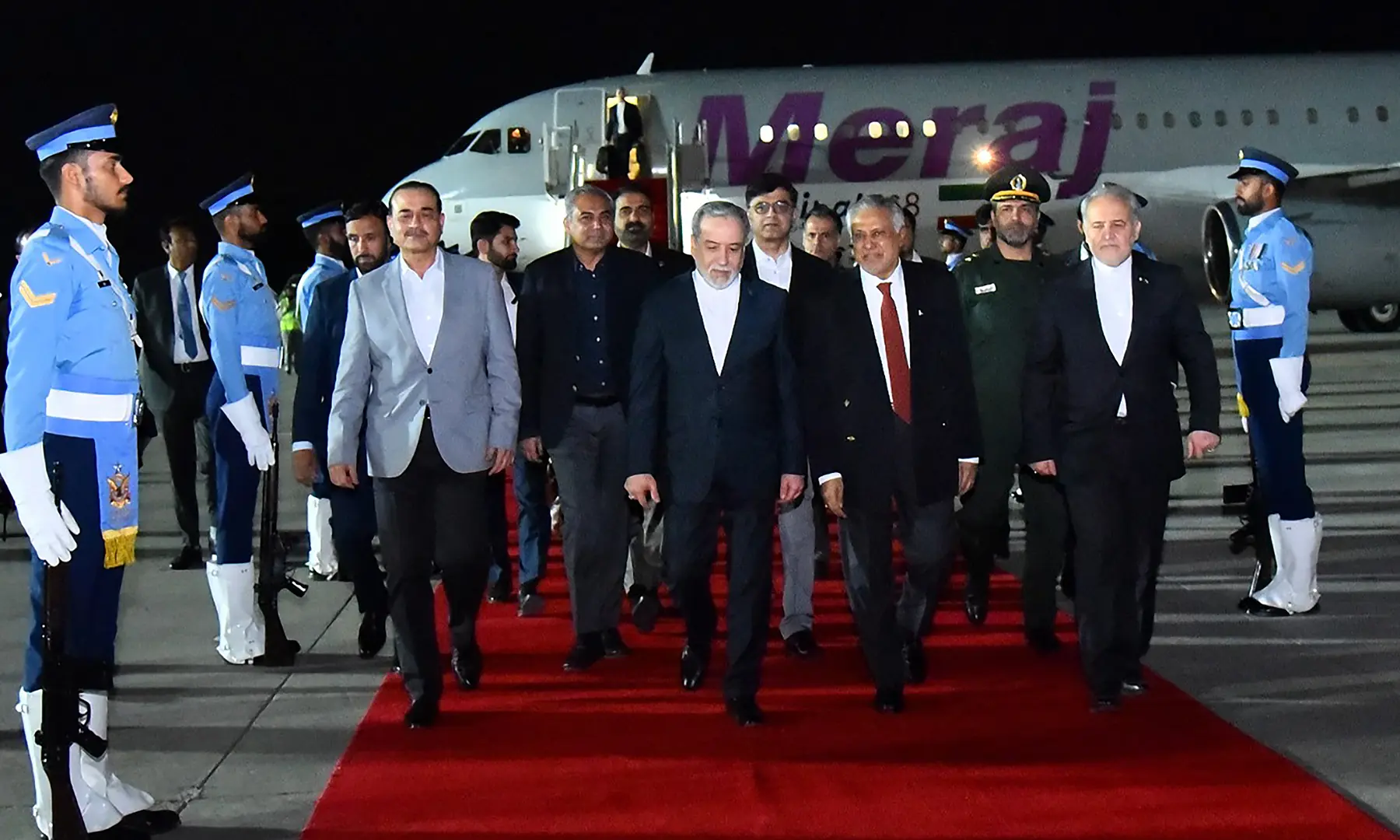
Pakistan's Foreign Minister Ishaq Dar and Army Chief Field Marshal Asim Munir receive Iranian FM Abbas Araghchi at Nur Khan air base, Islamabad, on April 24, 2026 — one day before Araghchi departed without meeting US envoys Witkoff and Kushner. (Dawn.com)
Diplomatic EscalationApr 25 – Apr 25, 2026De-escalationKey moment

'We Have All the Cards': Trump Cancels Witkoff's 18-Hour Flight as Araghchi Departs Pakistan Without Talks, Leaving Islamabad Round 2 in Ruins

The second round of Islamabad talks — billed by Pakistan and anticipated by oil markets as the most significant diplomatic opportunity since the April 11–12 collapse — died before it began on April 25, 2026 (Day 57). The structural problem had been visible for days. Iran's Foreign Ministry spokesman Esmaeil Baqaei had stated explicitly and repeatedly that "no meeting with US negotiators is planned in Pakistan" and that Tehran "does not believe in deadlines or ultimatums." Yet Pakistan pressed ahead, publicly announcing Araghchi's arrival and expressing hope that proximity would produce contact. Araghchi landed in Islamabad and held substantive bilateral sessions with Pakistani Deputy Prime Minister and Foreign Minister Ishaq Dar — their third conversation in four days — and with Army Chief Field Marshal Asim Munir, who had been the primary architect of the original April 7 ceasefire. The meetings produced extensive coordination on Iran's negotiating position and Pakistan's continuing mediation role, but they were bilateral — Iran-Pakistan, not Iran-US. A US logistics and security team was already on the ground in Islamabad, and Steve Witkoff and Jared Kushner were preparing for an 18-hour transatlantic flight that would have put them in Pakistan the following morning. The collision between the two sides' definitions of what "Islamabad Round 2" meant was not a miscommunication — it was a structural incompatibility. Iran's position was that the US naval blockade imposed on April 13 made substantive nuclear negotiations impossible; Tehran would engage diplomatically, but not on the terms Washington had set. The US position was that Iran needed to show up and engage on the nuclear file before any blockade discussion could occur. Neither side had moved. After his bilateral meetings, Araghchi departed Islamabad for Muscat without ever entering a room with a US representative. The second round ended with no round having taken place.

United StatesDonald TrumpAbbas AraghchiSteve WitkoffJared KushnerEsmaeil BaghaeiScott BessentMasoud PezeshkianIshaq DarAsim MunirShehbaz Sharif
Read full analysis
Iranian Foreign Minister Abbas Araghchi meets with Pakistani Army Chief Field Marshal Asim Munir in Tehran on April 15, 2026. Araghchi arrived in Islamabad on April 24 for bilateral meetings as a precursor to a second round of US-Iran talks. (Middle East Monitor / Anadolu Agency)
De-escalationApr 24 – Apr 25, 2026De-escalation

Maximum Pressure Meets Maximum Diplomacy: Araghchi Flies to Islamabad as Witkoff and Kushner Are Dispatched — 24 Hours After Trump's Shoot-to-Kill Order

On April 24, 2026 — Day 56 of the US-led war on Iran — Iranian Foreign Minister Abbas Araghchi landed in Islamabad for what Pakistan had publicly framed as a potential resumption of direct Iran-US contact. The visit arrived against the backdrop of profound diplomatic wreckage. The first Islamabad round, held April 11–12, had lasted 21 hours across a 300-member US delegation and a 70-member Iranian team, with six working groups convening in parallel before the entire structure collapsed. The breakdown came when Vice President JD Vance demanded substantive progress on the nuclear file; Araghchi countered that Washington had moved the goalposts since the delegations arrived. The US imposed a full naval blockade of Iranian ports on April 13, the day after the talks failed — a sequenced economic escalation that Tehran read as proof Washington had entered the first round in bad faith and used the talks to buy time to position the blockade. Islamabad Round 2 was therefore defined, before Araghchi's plane touched down, by the question of whether either side had moved enough to make a meeting structurally possible. Araghchi's bilateral schedule in Islamabad was substantive but entirely confined to Iran-Pakistan channels. He met Pakistani Deputy Prime Minister and Foreign Minister Ishaq Dar — their third conversation in four days — for sessions that produced extensive coordination on Iran's negotiating position, Pakistan's continuing mediation role, and the ceasefire architecture that remained technically in force. He also met Army Chief Field Marshal Asim Munir, the officer who had personally brokered the April 7 ceasefire agreement that created the diplomatic window both Islamabad rounds had been scheduled into. Munir's role had evolved from military intermediary to indispensable institutional guarantor: Pakistan's credibility with both Washington and Tehran rested on his personal standing with senior officials on both sides, and it was through his channels that Pakistan had persuaded both delegations to engage in the first place. Neither JD Vance nor Iranian Parliamentary Speaker Mohammad Bagher Ghalibaf — who had led Iran's full delegation on April 11–12 — was present, a deliberate calibration that framed this as a preparatory engagement rather than a principals session. The question was whether Araghchi's arrival in the same city as a waiting US logistics team would develop into something more.

IranAbbas AraghchiSteve WitkoffJared KushnerIshaq DarAsim MunirShehbaz SharifMohammad Bagher GhalibafDonald Trump
Read full analysis
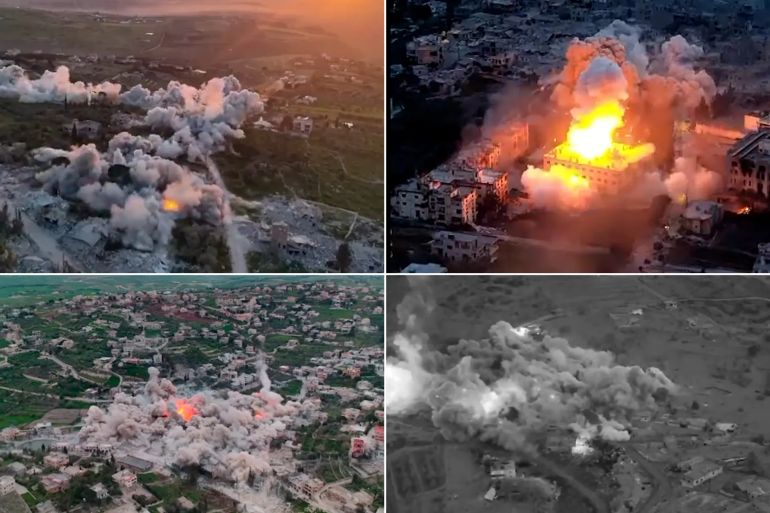
Footage shared by Israeli social media accounts showing ongoing bombings in villages in southern Lebanon. Al Jazeera's visual investigation revealed a systematic policy of demolition in the 55 towns occupied by Israeli forces within the "yellow line" zone, with satellite imagery confirming continued demolitions after the ceasefire. (Al Jazeera)
De-escalationApr 23 – May 5, 2026Key moment

The Gaza Playbook in Lebanon: Israel Razes Towns, Kills Medics and Journalists as Hezbollah's Daily FPV Drones Bleed the IDF

The three-week Lebanon ceasefire extension that President Trump announced from the Oval Office on April 23, 2026 arrived with considerable diplomatic fanfare — it was presented as evidence that the Lebanon track, unlike the Iran nuclear standoff, could be managed through incremental agreements. Within five days, the extension had delivered what the Lebanon conflict had produced throughout: a daily rhythm of Hezbollah drone strikes and Israeli ground operations, each side maintaining its stated ceasefire while violating its substance, neither willing to absorb the cost of a genuine halt. The fundamental mechanism of the breakdown was the fiber-optic FPV drone — a modified first-person-view racing drone retrofitted with warheads and guided by a physical fiber-optic cable rather than a radio-frequency signal, making it effectively immune to Israel's sophisticated electronic warfare systems. On April 28, a Hezbollah FPV fiber-optic drone struck Israeli positions at Qantara in the occupied southern Lebanon border zone, killing one soldier and wounding six others. Two days later, on April 30, a second Hezbollah FPV drone killed IDF Sergeant Liem Ben Hamo, 19, of the elite Golani Brigade, also at Qantara. The two Qantara strikes, three days apart, illustrated the mechanism of slow attrition that Hezbollah had adopted as its primary operational posture: not the massed missile barrages that had characterised the conflict's early phase but a persistent low-cost pressure campaign generating Israeli casualties at a rate the IDF could not simply absorb as an acceptable background cost of occupation. The Golani Brigade, one of Israel's most decorated combat units, was bearing the brunt of the frontier engagement, and Ben Hamo's death — a 19-year-old soldier killed inside Lebanese territory that Israel maintained it had a right to occupy under the Yellow Line framework announced earlier in April — concentrated the domestic political cost of an occupation that Israeli military planners had publicly framed as temporary but appeared structurally open-ended.

LebanonHezbollahIDF Golani BrigadeJoseph AounUNIFILNaim QassemLebanese Civil DefenseOxfam
Read full analysis
An Iranian tanker in the Strait of Hormuz — the waterway where President Trump ordered the US Navy to use lethal force against any boat laying mines, April 23, 2026. Iran's IRGC called the order an "overt breach of the ceasefire." (Reuters via Al Jazeera)
Military ThreatApr 23 – Apr 24, 2026ContinuationKey moment

Trump Orders Navy to 'Shoot and Kill' in Hormuz; IRGC Calls It 'Overt Ceasefire Breach' as Oil Surges Past $100

April 23, 2026 — Day 55 of the US-led war on Iran — opened with President Trump issuing the most explicit lethal-force directive of the conflict to date. Speaking from the White House, Trump ordered the US Navy to "shoot and kill any boat... that is putting mines in the waters of the Strait of Hormuz" and demanded the order be executed with "no hesitation." The directive represented a deliberate escalation of US rules of engagement that had, until that point, authorised the Navy to intercept, board, and seize Iranian-linked vessels but stopped short of authorising lethal fire against small craft in international waters without confirmed prior hostile action. The immediate military context was a sustained IRGC mine-laying campaign in the strait's western approaches — designed to complicate US minesweeping operations, force commercial marine insurers to restrict coverage from Hormuz transits, and create a physical deterrent against the tanker traffic the US blockade was simultaneously trying to sever from Iranian ports. The practical operational challenge — distinguishing a mine-laying vessel from any other small boat navigating one of the world's most congested waterways — was one the Pentagon did not address in its public communications. The order was directed at a tactical problem; its implications were strategic. Trump simultaneously tripled US minesweeping operations in the strait, deploying additional mine countermeasure vessels to accelerate clearance of the approaches between Qeshm and the open Gulf. He also announced the seizure of a fourth Iranian-linked tanker, the Majestic X, interdicted in the Indian Ocean as part of the maximum-pressure campaign targeting Iran's crude export shadow fleet — the network of vessels using flag changes, AIS transponder spoofing, and Malaysian intermediary ports to route Iranian oil to Chinese refineries despite the blockade. The Majestic X was the fourth such interdiction since April 13, each seizure further reducing Iran's ability to monetise the crude simultaneously accumulating in onshore storage facilities approaching physical capacity. Congress was briefed that mine-clearing in Hormuz could take up to six months even under favourable conditions — a figure the Pentagon publicly disputed, arguing the timeline was contingent on Iranian compliance with any eventual ceasefire arrangement rather than purely on US operational capacity. The dispute between Congress and the Pentagon reflected a deeper uncertainty: whether the IRGC's mine-laying campaign was an operation running independently of Iran's diplomatic track or a deliberate signal coordinated with the posture Araghchi was simultaneously conducting in Islamabad.

United StatesDonald TrumpIRGCMasoud PezeshkianUS Central CommandPete Hegseth
Read full analysis
Iranian Revolutionary Guard Corps (IRGC) naval forces escort the seized container vessel Epaminodas through the Strait of Hormuz toward Iranian coastal waters, April 22, 2026, as Iran seized two international ships in a direct counter-move to the US naval blockade. (Turkiye Today / IRGC)
Military ThreatApr 22 – Apr 22, 2026ContinuationKey moment

IRGC Seizes MSC Francesca, Epaminodas, Attacks Euphoria as Trump Declares Iran 'Seriously Fractured' and Extends Ceasefire Indefinitely

April 22, 2026 — Day 54 — marked the moment Iran converted its maritime threats into direct action. Within hours of Trump announcing an indefinite ceasefire extension and cancelling JD Vance's trip to Islamabad, the IRGC Navy seized two international cargo ships — MSC Francesca (labelled by Tehran as "linked to the Zionist regime") and the Epaminodas (a Liberia-flagged vessel bound for India) — escorted them to Iranian coastal waters, and left a third ship, the Greek-operated MV Euphoria, disabled off Iran's coast. The UK Maritime Trade Operations Centre reported that one IRGC gunboat fired without issuing a radio hail, and that the Epaminodas had already been granted transit permission when it was attacked — details Iran's state media disputed. The seizures were Iran's most assertive single-day maritime action since the 2026 war began, and came in direct response to the US seizing the MV Touska on April 20.

IranIRGC Naval CommandDonald TrumpJD VanceMohammad Bagher GhalibafMojtaba Ferdousi PourEsmaeil BaghaeiShehbaz SharifAsim MunirMark Rutte (NATO)Xi JinpingJoseph Aoun
Read full analysis
Workers prepare the Serena Hotel in Islamabad, Pakistan, ahead of the second round of US-Iran ceasefire negotiations, April 20, 2026. (AP)
Diplomatic EscalationApr 21 – Apr 21, 2026ContinuationKey moment

'Negotiating With a Finger on the Trigger': Iran's Last-Minute U-Turn for Islamabad Round 2 as the Ceasefire Clock Expired

The diplomatic confrontation that brought both sides to the edge of renewed war on April 21, 2026 had a specific proximate trigger: the seizure of the MV Touska by the USS Spruance in the Gulf of Oman, the latest in a series of US interdictions targeting Iran's crude export shadow fleet under the naval blockade imposed on April 13. For IRGC hardliners led by commander Ahmad Vahidi, the Touska seizure was definitive — Washington was not negotiating in good faith, had used the post-first-round ceasefire period to expand its economic stranglehold on Iran, and had demonstrated that showing up to talks produced not reciprocal gestures but further seizures. Vahidi's position was that Iran could not enter a second round of Islamabad talks while the US was actively seizing Iranian assets in international waters; to do so would legitimise the blockade as a tool of coercive diplomacy rather than a ceasefire violation. The logic was internally consistent and politically powerful — the IRGC's institutional authority derived partly from its posture as defender of Iranian sovereignty, and accepting negotiations under these conditions would directly undermine that standing. Parliament Speaker Mohammad Bagher Ghalibaf, who had led Iran's 70-member delegation through the 21-hour first round of Islamabad talks on April 11–12, took the opposing position. From his perspective, the alternative to engagement was economic catastrophe: the blockade had collapsed Iranian crude exports from 2.1 million barrels per day to approximately 567,000 barrels per day; onshore storage was approaching capacity with 12 to 22 days remaining; and the IRGC's Hormuz toll corridor, while generating revenue, could not offset the cumulative damage to the broader economy. Iran's electricity grid was under severe strain from war damage and foreign currency reserves were depleting. Ghalibaf's calculation was that however disadvantageous the negotiating environment, the alternative — resuming active combat against a US military posture that had already destroyed Iranian nuclear infrastructure — was worse. The internal standoff between these two positions was not resolved through consensus. As midnight GMT on April 22 drew close, the cost of no decision became the cost of resumed war, and the arithmetic resolved itself.

IranMohammad Bagher GhalibafAhmad VahidiEsmaeil BaghaeiMasoud PezeshkianJD VanceSteve WitkoffJared KushnerAttaullah TararShehbaz SharifAsim MunirDonald Trump
Read full analysis
Iranian Revolutionary Guard Corps (IRGC) naval forces escort the seized container vessel Epaminodas through the Strait of Hormuz toward Iranian coastal waters, April 22, 2026, as Iran seized two international ships in a direct counter-move to the US naval blockade. (Turkiye Today / IRGC)
Military ThreatApr 19 – Apr 22, 2026ContinuationKey moment

48 Hours to Zero: US Seizes MV Touska, Iran Walks Out of Islamabad, Trump Declares Ceasefire Ends Wednesday

The final 48 hours of the April 7 ceasefire were detonated into crisis by a single naval operation. In the early hours of April 20, 2026, the USS Spruance, operating in the Gulf of Oman under the blockade's interdiction mandate, fired warning shots at and then forcibly boarded the MV Touska, an Iranian container ship — the first vessel physically seized since the blockade began on April 13. The operation's timing was acutely sensitive: Pakistan was in the final stages of arranging the second round of Islamabad talks, both US and Iranian delegations were preparing travel logistics, and the two-week ceasefire brokered by Army Chief Asim Munir on April 7 was approaching its expiry deadline of April 22 with no confirmed extension. The Touska seizure detonated into that diplomatic window. Iran's foreign ministry responded within hours, designating the seizure "piracy" under international maritime law — a legally specific characterisation that placed the USS Spruance's action outside the framework of legitimate blockade operations and into the category of criminal conduct under the UN Convention on the Law of the Sea. Tehran simultaneously announced its withdrawal from the planned second round of Islamabad talks. The IRGC issued a formal statement vowing retaliation. Iran's lead negotiator Mohammad Bagher Ghalibaf declared the Hormuz standoff "impossible" to break without the US first lifting its naval blockade — a restatement of Iran's structural precondition now reinforced by the Touska as fresh evidence of American bad faith during a nominally active ceasefire. The Chinese dimension added a further layer of diplomatic complexity. Beijing's foreign ministry voiced concern over the seizure, noting that the MV Touska had loaded cargo in Chinese ports — framing the interdiction not merely as a US-Iran bilateral dispute but as an action affecting Chinese commercial interests that Beijing could not publicly ignore. The Touska was part of the shadow-fleet network routing Iranian crude to Chinese refineries under third-country flags and spoofed transponders; its seizure confirmed that the US interdiction campaign was prepared to target vessels whose last port of call was China, a threshold with significant implications for Washington-Beijing relations at a moment when Hengli Petrochemical had already been sanctioned.

United StatesDonald TrumpMohammad Bagher QalibafPete HegsethKaroline LeavittVikram MisriUN Secretary-General António GuterresPakistan ArmyJD VanceSteve WitkoffJared KushnerEsmaeil BaghaeiMasoud Pezeshkian
Read full analysis
The Strait of Hormuz — site of a rapid reversal on April 18, 2026, as Iran's IRGC declared the waterway back under "strict management" after the US confirmed its naval blockade would continue despite Iran's brief opening announcement the day before.
Military ThreatApr 18 – Apr 19, 2026EscalationKey moment

IRGC Labels US Blockade 'Piracy and Maritime Theft'; Trump Warns He Will 'Drop Bombs Again' by April 22

April 18, 2026 — Day 49 of the US-led war on Iran — brought the most precisely calibrated act of Iranian legal-rhetorical warfare since the conflict began. Iran's IRGC general military command, Khatam Al-Anbiya, issued a formal statement designating the US naval blockade of Iranian ports as "piracy and maritime theft" under international law — a legally specific framing that stripped the blockade of its status as a lawful act of belligerency and reclassified it as criminal conduct subject to enforcement action rather than diplomatic negotiation. Under the UN Convention on the Law of the Sea and customary international maritime law, applying the piracy designation to the US blockade positioned the IRGC's subsequent actions — including gunboat operations against commercial vessels — as law enforcement against criminal behaviour rather than military escalation against a sovereign adversary. The framing was aimed simultaneously at domestic audiences, Gulf state governments, and the international legal community that might eventually adjudicate the conflict's maritime dimensions. The IRGC simultaneously announced that the Strait of Hormuz had reverted to "strict management" — operational language meaning a return to the mandatory IRGC-escort corridor through the 20-mile channel between Qeshm and Larak islands inside Iranian territorial waters, with the toll collection mechanism reinstated for all commercial transit. IRGC gunboats fired warning shots at a tanker attempting to transit outside the escort corridor — the most direct kinetic action in the strait since the blockade's imposition on April 13. Iran's Foreign Ministry reinforced the IRGC's action with a longer-range warning: Iran was developing a "permanent Hormuz control mechanism" — a phrase that previewed the formal toll proposal Araghchi would carry to Oman eight days later — and declared that "no Gulf port will be safe" if Iranian ports remained under US blockade. The Gulf-port warning was calibrated to apply direct economic pressure on the UAE, Kuwait, Qatar, and Saudi Arabia, whose port revenues and petrochemical exports depended on regional shipping security, and whose quiet cooperation with the US blockade had been a persistent source of Iranian diplomatic frustration.

IranIRGCKhatam Al-Anbiya CommandEbrahim AziziIranian Foreign MinistryDonald Trump
Read full analysis
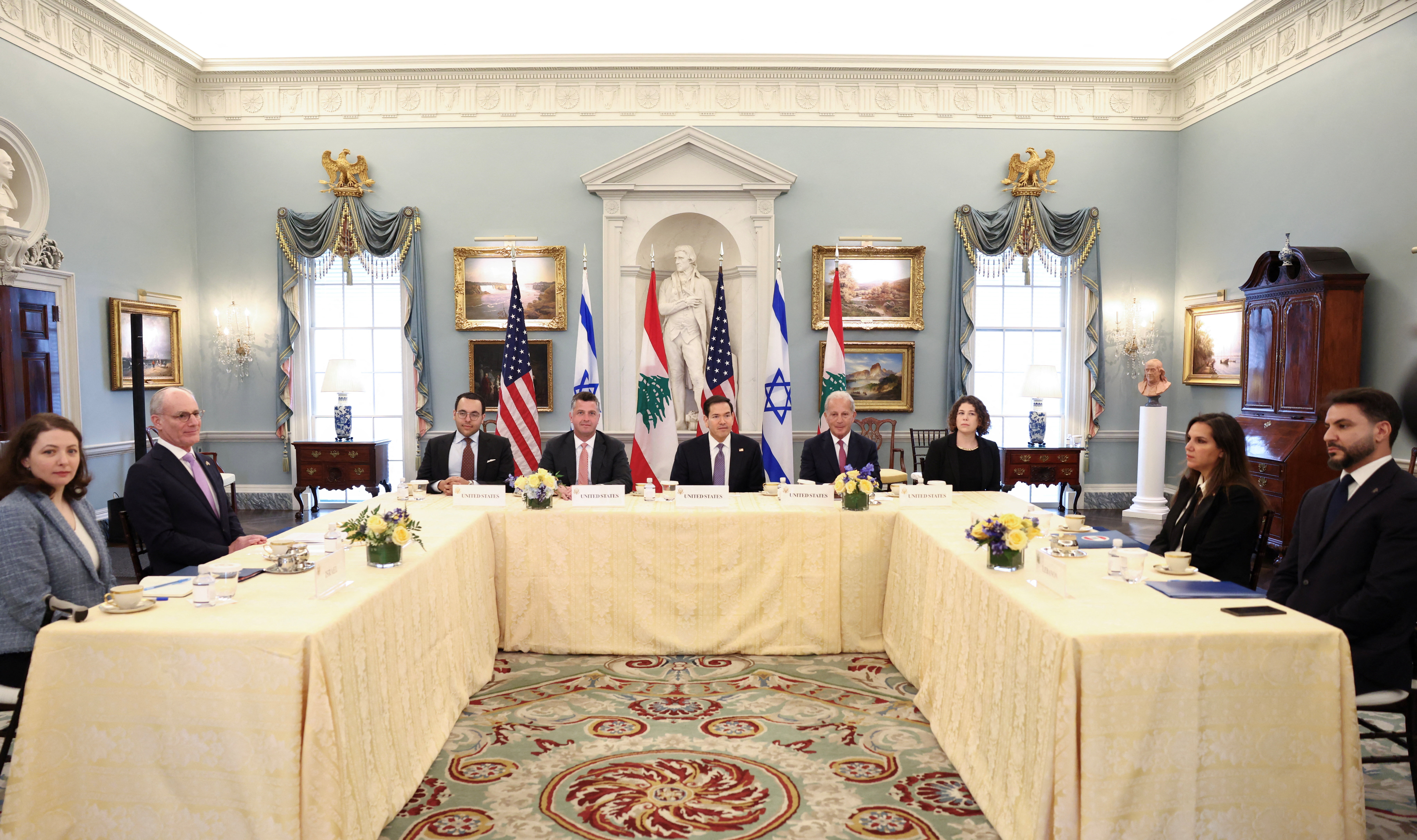
President Trump in the Oval Office with Vice President JD Vance, Secretary of State Marco Rubio, and ambassadors from Israel and Lebanon on April 23, 2026, announcing a three-week extension of the Israel-Lebanon ceasefire. (Shutterstock via yourNEWS)
Military ThreatApr 17 – Apr 24, 2026De-escalationKey moment

The 'Yellow Line': Israel Moves to Create a Permanent Occupation Buffer in South Lebanon Under Cover of Ceasefire

Israel's announcement of the "Yellow Line" on April 21, 2026 brought into the open a strategy that had been visible in IDF operational behaviour for weeks. The concept — a 10-kilometre military control zone stretching into sovereign Lebanese territory north of the international border — was presented by Prime Minister Benjamin Netanyahu as the security architecture that would define Israel's northern border for the foreseeable future. Senior Israeli military officials were explicit about the precedent: the Yellow Line would replicate in Lebanon what the IDF had done in Gaza following October 2023 — a systematic depopulation of the territory immediately adjacent to the Israeli border, creating a depopulated buffer zone whose security Israel controlled regardless of the formal sovereignty arrangements governing it. The announcement came in the same week that Israeli and Lebanese officials were conducting their first direct peace talks in Washington — an act of deliberate simultaneity that defined Israel's negotiating posture: create facts on the ground first, negotiate from them second. The model had a name, a map, and an operational implementation already underway. While Israeli and Lebanese ambassadors were sitting across a table from US State Department officials in Washington for the most significant direct talks between the two countries in decades, IDF bulldozers were demolishing homes in Haneen, Beit Lif, al-Qantara, and Toul — towns inside the 10-kilometre zone designated for depopulation and structural clearance. Residents of 55 Lebanese villages were formally barred from returning to their homes. More than 1,500 buildings had been destroyed across the occupied south by the time NPR published its investigation on April 30. UNIFIL, whose peacekeeping mandate derived from UN Security Council Resolution 1701's requirement for Israeli withdrawal from Lebanese territory, documented destruction characterised as "inconsistent with legitimate military necessity." The demolition operations were conducted during a nominally active ceasefire, under the diplomatic cover of Washington talks — a sequencing that made the Yellow Line strategy maximally effective: by the time any peace agreement was negotiated, the facts on the ground that Israel would negotiate from would already be written in concrete and rubble.

IsraelBenjamin NetanyahuIDFLebanese GovernmentHezbollahHassan FadlallahJoseph AounSimon KaramUS State DepartmentNada Hamadeh Moawad
Read full analysis
Israeli Ambassador Yechiel Leiter and Lebanese Ambassador Nada Hamadeh Moawad at the US State Department in Washington, April 14, 2026, for the first direct Israel-Lebanon diplomatic talks since 1983. (Reuters)
De-escalationApr 16 – Apr 19, 2026De-escalationKey moment

Lebanon Ceasefire Unlocks Iran Talks; Iran Opens Hormuz as Markets Hit All-Time Highs

The April 16, 2026 Lebanon ceasefire — brokered by the United States and taking effect as a 10-day cessation of hostilities between Israel and Hezbollah — mattered to the Iran war not because of its Lebanon content but because of what it removed from Tehran's diplomatic architecture. Since the February 28 opening of the US-Iran war, Iranian officials had maintained as a stated precondition for returning to peace talks that Israel must halt its bombardment of Lebanon. The formulation was a combination of genuine solidarity with Lebanese Shia communities and IRGC-affiliated networks, and a strategic delay mechanism: as long as Lebanon was actively under Israeli bombardment, Tehran had a publicly defensible reason to decline engagement with the Islamabad framework without explicitly refusing to discuss the nuclear file. The Lebanon ceasefire — achieved through 48 hours of intensive US State Department mediation and the first direct Israel-Lebanon ambassadorial talks since the conflict began — removed that argument from the table, forcing Iran to either engage or reveal that the Lebanon precondition had always been one layer of a deeper refusal. Pakistan's Army Chief Field Marshal Asim Munir, who had been conducting continuous shuttle diplomacy between Tehran, Islamabad, and Washington since the April 7 ceasefire, was in Tehran on April 16–17 making progress on what his office described as "sticky issues" — the diplomatically coded language for the blockade and nuclear file where the core incompatibilities lay. Munir's presence in Tehran at the precise moment the Lebanon ceasefire took effect was not coincidental; Pakistan had coordinated the timing carefully to maximise the window of diplomatic possibility that the Lebanon development created. The removal of Iran's Lebanon precondition meant Tehran would need a different stated reason to decline nuclear talks — or would need to show up. The next 48 hours would determine which path Tehran chose, and it chose, at least briefly, to signal accommodation: Araghchi's Hormuz declaration arrived faster than any analyst had anticipated and demonstrated that the diplomatic channel Munir had been tending was still live.

IranIranian Foreign MinistryPakistan ArmyUS State DepartmentIsraeli Government
Read full analysis
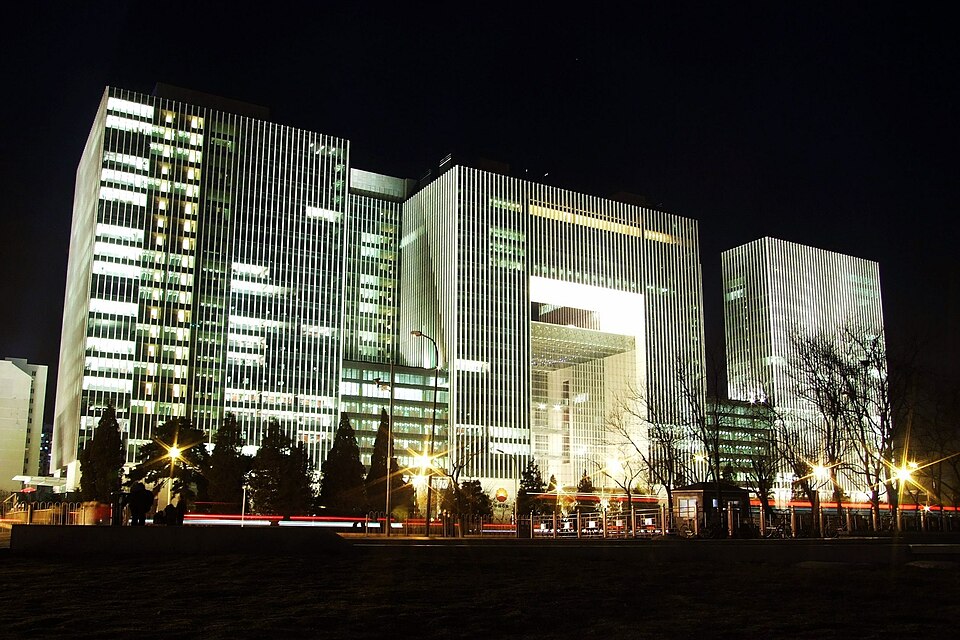
The headquarters of China National Petroleum Corporation (CNPC) in Beijing. China, which secretly imports up to 90% of Iran's seaborne crude via a shadow fleet, directly warned the US on April 14, 2026 that the Strait of Hormuz "is open to us" — a pointed challenge to the legality of the US naval blockade.
Diplomatic EscalationApr 13 – Apr 24, 2026Key moment

US Sanctions China's Hengli Refinery and 40 Shadow Fleet Shippers as Beijing Faces the Price of Buying Iranian Oil

When the US imposed its naval blockade of Iranian ports on April 13, 2026, China's response was immediate and unusually direct. Defense Minister Dong Jun declared publicly that "The Strait of Hormuz is open to us" — asserting Chinese navigational rights in the strait as a matter of principle rather than deference to the US blockade's authority. The Chinese Foreign Ministry followed with a formal demand that the United States lift the blockade, characterising it as "dangerous and irresponsible" and incompatible with international law and freedom of navigation. A Chinese-owned tanker was tracked by US naval intelligence attempting to breach the blockade in its first hours of operation — the clearest demonstration that Beijing was prepared to test the enforcement boundaries of the US interdiction regime with commercial assets. The assertive posture was complicated by a parallel role China had played in the days before. Beijing had been instrumental in convincing Tehran to accept Pakistan's April 7 two-week ceasefire — using diplomatic channels and economic leverage to persuade Iranian leadership that a pause served their interests. China had helped construct the diplomatic architecture that created the Islamabad talks window. The dual positioning — public mediator, private beneficiary of heavily discounted Iranian crude — was China's characteristic approach to the crisis: accumulate diplomatic credit for peace efforts while extracting maximum economic benefit from Iranian oil, maintaining influence with both Tehran and Washington without committing to either side's core demands. The problem for Beijing was that the US blockade threatened both tracks simultaneously. If it succeeded in collapsing Iran's oil revenues, China's supply of discounted Iranian crude would be disrupted regardless of China's diplomatic posture.

ChinaChinese Defense MinistryDong JunChinese Foreign MinistryGuo JiakunChina National Petroleum CorporationHengli PetrochemicalScott BessentUS Treasury OFAC
Read full analysis
US Vice President JD Vance led the American delegation at the Islamabad Talks on April 11-12, 2026 — the highest-level direct US-Iran negotiations since the 1979 Iranian Revolution. The talks collapsed after 21 hours without a deal.
Military ThreatApr 11 – Apr 14, 2026EscalationKey moment

Islamabad Talks Collapse After 21 Hours; US Imposes Naval Blockade of Iran

On April 11–12, 2026 — Days 42 and 43 of the US-led war on Iran — both sides sat across from each other in Islamabad for the most consequential bilateral diplomatic contact since the 1979 Iranian Revolution. The scale of the delegations was unprecedented for a conflict still in active progress: 300 American officials, led by Vice President JD Vance and Special Envoys Steve Witkoff and Jared Kushner, faced a 70-member Iranian team led by Parliament Speaker Mohammad Bagher Ghalibaf — a former senior IRGC commander before entering politics — and Foreign Minister Abbas Araghchi. Pakistan had transformed Islamabad into a diplomatic operations hub: Army Chief Field Marshal Asim Munir, who had personally brokered the April 7 ceasefire creating the two-week window for talks, served as the active mediator, with Pakistan's Foreign Ministry and intelligence services managing logistics, security, and the back-channel communications that kept the delegations in the building when surface negotiations stalled. Six working groups operated in parallel across 21 hours, each addressing a discrete component of the dispute — the nuclear file, the Hormuz management framework, sanctions, humanitarian issues, Lebanon, and ceasefire architecture. The fact that six working groups convened simultaneously suggested genuine depth: both sides had prepared technical delegations capable of engaging at the level of specific provisions rather than political posturing alone. Iran's 10-point counter-proposal, delivered early in the process, included conditions on Hormuz and Lebanon that the US had not anticipated in its own 15-point framework, and the divergence between the two documents defined the working group sessions throughout the night.

United StatesUS NavyCENTCOMJD VanceIranian Foreign MinistryIRGC
Read full analysis
March 2026
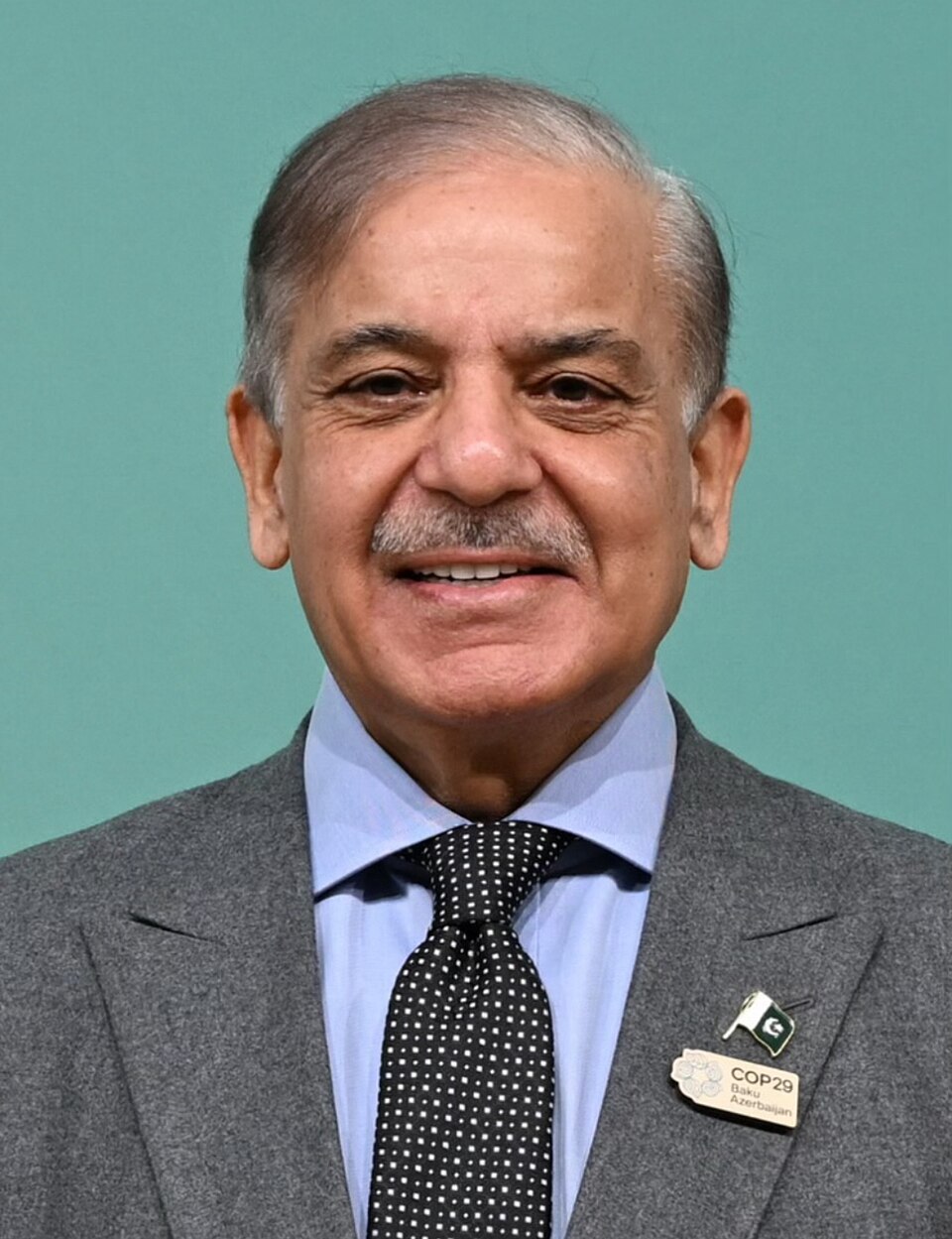
Pakistani Prime Minister Shehbaz Sharif, whose government played a pivotal mediating role, delivering the US 15-point peace proposal to Iran on March 24, 2026, and continuing to facilitate negotiations in subsequent weeks.
De-escalationMar 24 – Apr 8, 2026De-escalationKey moment

Pakistan Brokers a Fragile Two-Week Ceasefire — Then the Lebanon Dispute Shatters It

On March 24, 2026 — Day 24 of the US-led war on Iran — the United States delivered through Pakistan its most comprehensive statement of settlement terms to date. The 15-point framework, transmitted by Pakistan's government as a formal diplomatic communication to Tehran, demanded the full dismantlement of Iran's nuclear infrastructure, an immediate and permanent end to uranium enrichment, the surrender of all accumulated enriched uranium stockpiles to a third-party custodian, binding limitations on Iran's ballistic missile programme, and a complete cessation of support for IRGC-affiliated proxy networks across the Middle East — Hezbollah, Hamas, the Houthis, and Iraqi Shia militia groups. The framework was, in effect, a demand for Iran's strategic disarmament across every dimension that gave Tehran regional influence: nuclear, conventional missile, and proxy. From Washington's perspective it was a comprehensive settlement offer that would end the war on terms addressing every element of the strategic threat Iran posed. From Tehran's perspective it was an unconditional capitulation document dressed in diplomatic language, and Iran rejected it outright — no counter-offer to specific terms, no indication of which points were negotiable, no request for clarification. The 15 points were refused as a package. What followed was six weeks of back-channel diplomacy conducted almost entirely through Pakistan, with Islamabad serving as the discreet conduit through which both governments communicated without the domestic political cost of public direct engagement. Pakistan's role depended on a specific institutional asset: Army Chief Field Marshal Asim Munir's personal credibility with both American and Iranian senior officials, built through years of intelligence and security cooperation that predated the current conflict and gave him a degree of trusted access that no other third-party intermediary possessed.

United StatesUS State DepartmentIranian Foreign MinistryPakistani GovernmentIsraeli Government
Read full analysis
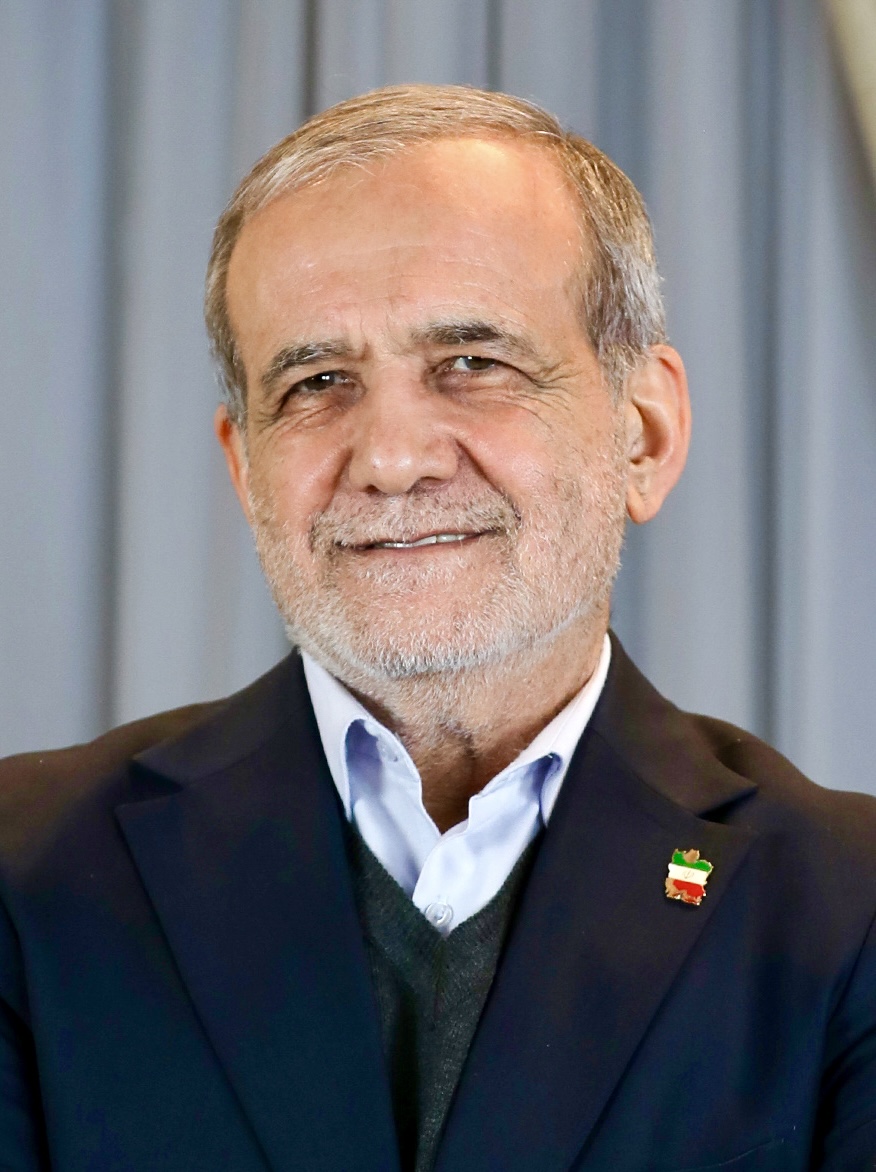
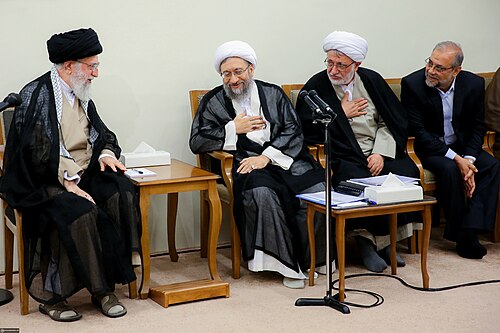
Iranian President Masoud Pezeshkian, who joined Speaker Ghalibaf and Chief Justice Mohseni-Eje'i on the interim leadership council that took power following the assassination of Supreme Leader Khamenei on February 28, 2026.
Domestic CrackdownMar 1 – Mar 12, 2026ContinuationKey moment

IRGC Forces Iran's Succession, Installs Mojtaba Khamenei as War-Time Supreme Leader

The succession crisis that produced Iran's third supreme leader in 47 years began not as a constitutional process but as a military operation conducted under fire. When the US and Israeli strikes of February 28, 2026 killed Supreme Leader Ali Khamenei — whose death was confirmed within hours, though Iran's state media took several days to formally announce it — the constitutional mechanism for selecting a successor was the Assembly of Experts, an 88-member clerical body empowered under the Iranian constitution to choose a new supreme leader from among qualified Islamic jurists. The Assembly's normal procedure required in-person deliberation. Ongoing US and Israeli airstrikes on Tehran and surrounding provinces made physical assembly too dangerous, and the targeted killing of a supreme leader — an event for which no precedent existed in the Islamic Republic's 47-year history — had triggered emergency security protocols that prevented senior clerics from travelling to any central location. The Assembly convened in an emergency online session, a format that the IRGC used to its maximum advantage. IRGC commanders made direct contact with Assembly members throughout the session in what participants later described as "psychological and political pressure" — a formulation covering a range of activities from direct statements about which candidate the IRGC would support to more opaque forms of persuasion available to an organisation that controlled Iran's security apparatus and knew where every cleric's family lived. The IRGC's preferred candidate was Mojtaba Khamenei, the 56-year-old son of the deceased supreme leader, who had no formal clerical credentials qualifying him for the position under the constitution's own requirements.

IranIRGCAssembly of ExpertsMojtaba Khamenei
Read full analysis
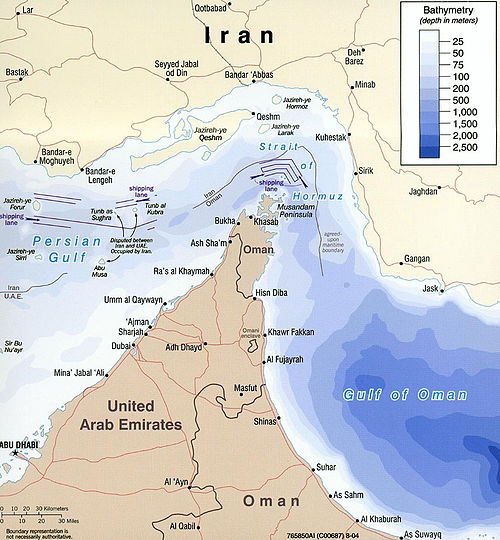
The Strait of Hormuz, threatened with closure by Iran during the 2026 conflict — a chokepoint for 20% of global oil trade.
Propaganda CampaignMar 1 – Apr 22, 2026De-escalation

Iran Launches Coordinated Global Meme Campaign, Trolling Trump and Targeting Western Audiences

Iran's information warfare campaign in the 2026 war was distinguished from its predecessors by its fluency in the native registers of Western social media culture. Iranian embassies — operating through official diplomatic accounts that could not be suspended without triggering diplomatic incidents — deployed meme formats, cultural references, and political irony that demonstrated a detailed understanding of the discourse spaces they were targeting. The proximate trigger for the campaign's most visible phase was President Trump's Truth Social posts in the war's early weeks, in which he threatened to obliterate Iranian cities and demanded that Iran reopen the Strait of Hormuz with language that included the phrase "Open the F***in' Strait." Iranian embassies responded not with formal diplomatic protests but with posts urging American officials to consider invoking the 25th Amendment — the constitutional mechanism for removing a president deemed unfit for office — and circulating Trump's profanity-laden posts as evidence of mental instability rather than strategic intent. Rather than engaging Trump's threats on their military merits, Iran's embassies converted his social media language into a domestic American political argument about fitness for office, targeting citizens and international observers who found the tone alarming. Epstein references — a recurring motif in anti-Trump social media — were woven into the campaign to further delegitimise the president personally among audiences already predisposed to distrust him. Lego-format imagery and meme templates borrowed from Western internet culture were used to present Iranian narratives in formats accessible to younger European and North American audiences with no prior engagement with Iranian state media. The campaign demonstrated that Iran's information operations had evolved from crude state propaganda into platform-native content warfare that required no traditional broadcast infrastructure and was difficult for Western platforms to moderate without triggering diplomatic incidents involving accredited embassy accounts.

IranIranian Ministry of Foreign AffairsIRGC Media WingIranian Embassies
Read full analysis
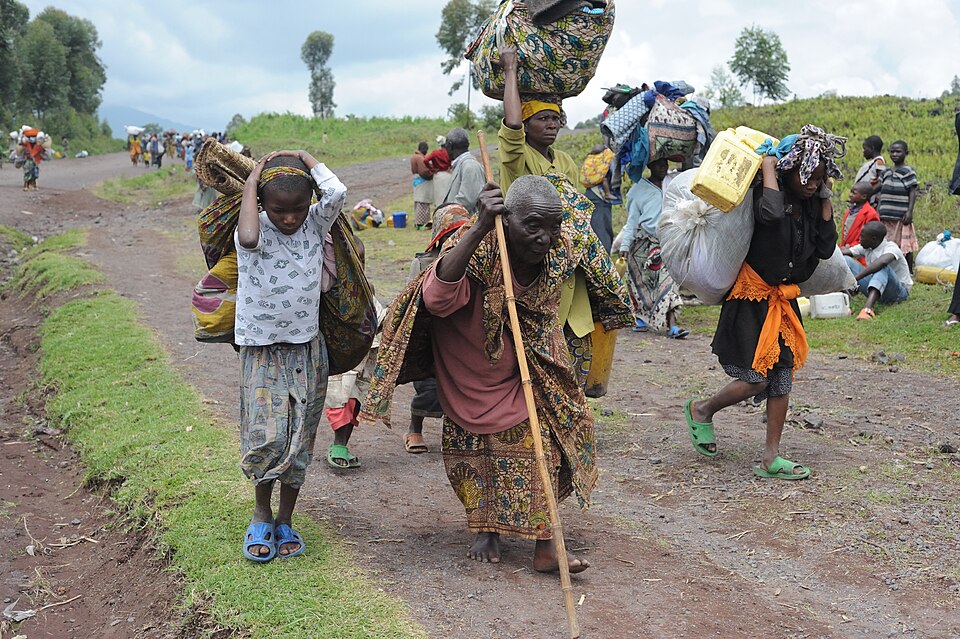
Internally displaced civilians — a crisis that would affect 3.2 million Iranians by early April 2026, as US and Israeli strikes on military, government, and civilian infrastructure continued across at least 20 provinces.
Military ThreatMar 1 – Apr 7, 2026EscalationKey moment

Strikes Kill Thousands of Civilians and Displace 3.2 Million, Triggering a Humanitarian Catastrophe

The United States and Israel launched Operation Epic Fury on February 28, 2026, targeting Iran's nuclear infrastructure, military command architecture, and air defence systems across multiple provinces simultaneously. The proximity of these targets to civilian population centres — nuclear enrichment facilities at Natanz, Fordow, and Isfahan were located near significant urban areas — produced a displacement crisis that outpaced any comparable event in the region in decades. Within the first seven days of strikes, more than 884,000 Iranians had fled their homes: residents of provinces under direct bombardment, populations within evacuation radii of targeted sites, and communities whose access to electricity, water, and road networks had been severed by strike damage to dual-use infrastructure. By early April, as the campaign entered its second month, the internally displaced population had reached 3.2 million. Iran's government reported more than 81,000 civilian structures damaged across 20 of Iran's 31 provinces — 61,000 residential homes, 19,000 commercial and industrial units, and 275 medical facilities including hospitals and primary care clinics. The Norwegian Refugee Council's first-month assessment described the situation as leaving "millions in extreme uncertainty," noting that many displaced Iranians could not return because the infrastructure around their homes had been destroyed alongside the military targets it surrounded. The distribution of damage across 20 provinces was a measure of the campaign's geographic ambition: unlike previous strikes on Iran's nuclear programme targeting specific facilities in isolation, Operation Epic Fury was a nationwide military operation whose collateral consequences were national in scale, affecting populations who had no proximity to any military installation but whose provincial electricity grids, factories, and road networks were struck as part of broader infrastructure suppression objectives.

IranUnited NationsUNHCRNorwegian Refugee CouncilHuman Rights Activists in Iran
Read full analysis
February 2026
A tanker anchored in the Strait of Hormuz off the coast of Qeshm Island, Iran, on April 18, 2026, amid Iran's closure of the strait following the IRGC gunboat attacks on Indian-flagged vessels.
Diplomatic EscalationFeb 28 – Apr 25, 2026Key moment

'The Largest Non-Hostile Casualty': India's Strategic Silence on the Iran War Leaves It Economically Battered and Diplomatically Eclipsed by Pakistan

India's response to the 2026 Iran war was defined from the outset by a deliberate ambiguity that satisfied no one and cost New Delhi on every front simultaneously. When the United States and Israel struck Iran's nuclear and military infrastructure on February 28, New Delhi issued no public condemnation, expressed no formal solidarity with Tehran, and launched no early diplomatic initiative to position itself as a mediator or protect its significant economic exposure to the conflict's consequences. India was the only founding BRICS member — in a grouping that included Russia, China, Brazil, and South Africa — that withheld even a formal statement on the strikes, a silence noticed in every capital tracking the international response. Prime Minister Modi spoke separately with Gulf leaders and with Israeli Prime Minister Netanyahu, issuing statements that condemned "attacks on sovereignty" without naming either the attacking parties or the target, and calling for "dialogue and diplomacy." The formulation was calibrated to preserve India's relationships with Washington and Tel Aviv, its Gulf state partners, and Beijing and Moscow within the BRICS framework — a positioning that attempted to avoid offending any party and succeeded in satisfying none. The strategic logic was legible: India received approximately 70% of its defence imports from Israel, purchased significant Gulf crude volumes, had built a diplomatic architecture premised on strategic autonomy, and could not afford to be seen aligning with a sanctioned Iran against its primary defence supplier. In a crisis that threatened all of those partnerships and India's economic supply chains simultaneously, the silence was the outcome of a calculation that any statement would foreclose more options than it preserved.

IndiaNarendra ModiVikram MisriIndian National CongressKapil KomireddiMinistry of External Affairs India
Read full analysis
Supreme Leader Ali Khamenei, who was killed in US and Israeli strikes on Iran beginning February 28, 2026.
Military ThreatFeb 28 – Mar 15, 2026EscalationKey moment

Iran's Unprecedented Retaliation: Missile Strikes and Hormuz Near-Closure

Operation Epic Fury, launched by the United States and Israel on February 28, 2026, targeted the full architecture of Iran's nuclear and military capability simultaneously — enrichment facilities at Natanz, Fordow, and Isfahan; air defence installations across multiple provinces; and the command networks of the Islamic Revolutionary Guard Corps. The strikes killed Supreme Leader Ali Khamenei within hours of their commencement, making him the first head of state assassinated by a foreign military operation in the modern era and triggering an immediate succession crisis in Tehran. The assassination was not incidental to the campaign's design: US and Israeli planners assessed that decapitating the supreme leadership alongside the nuclear programme would maximise the probability of a strategic outcome — a post-Khamenei Iran too destabilised to reconstitute its nuclear capacity. The miscalculation was that the IRGC had prepared contingency command structures for precisely this scenario, and Khamenei's death did not produce the anticipated political paralysis but instead triggered the military's takeover of the succession process, installing Mojtaba Khamenei as supreme leader nine days later under conditions of explicit military pressure. The context in which Iran launched its retaliation was therefore one in which the constitutional government had been decapitated, the military had assumed sovereign control, and the new leadership's first public statement had vowed to continue fighting rather than negotiate.

IranIRGCIranian Armed ForcesIranian Navy
Read full analysis
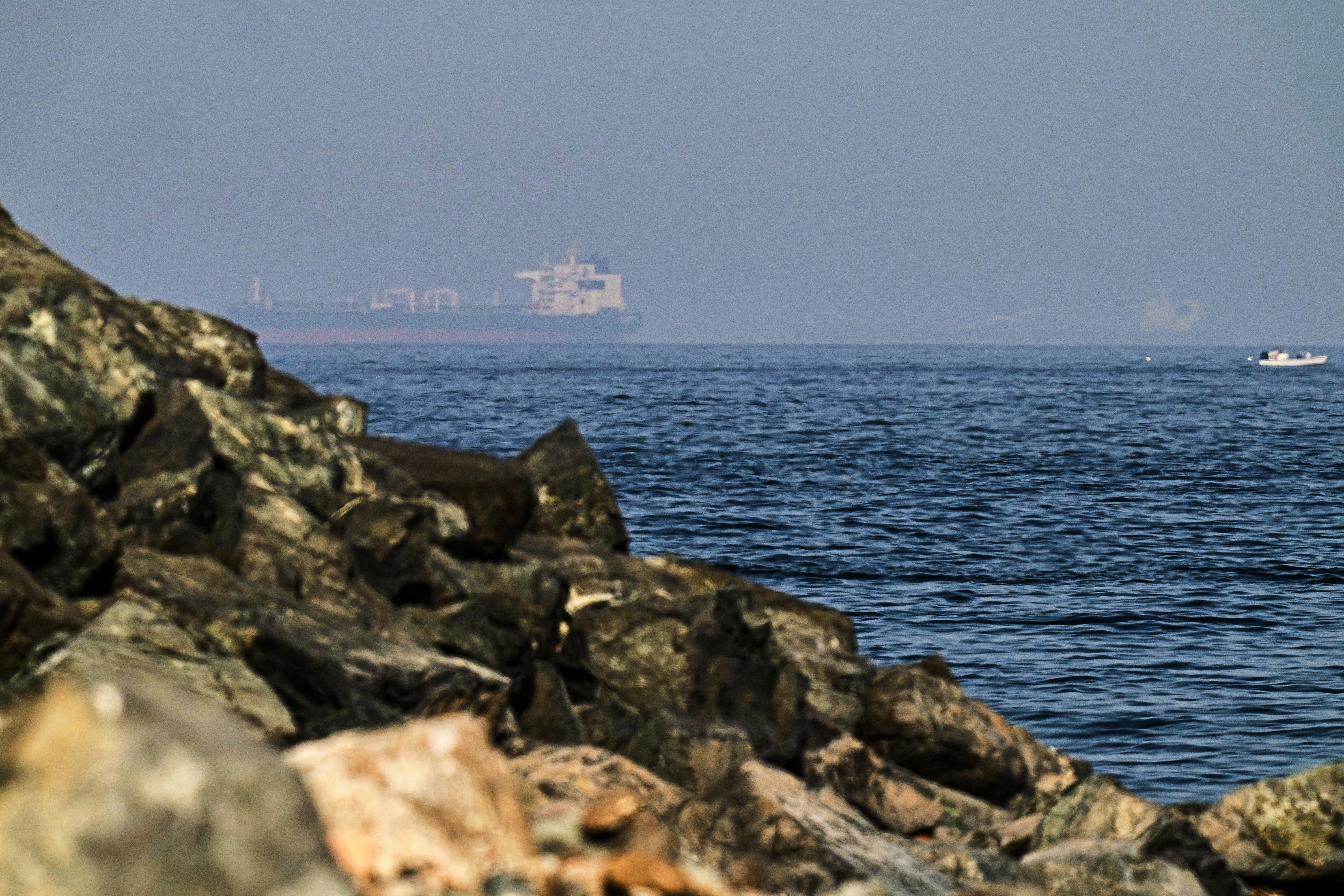
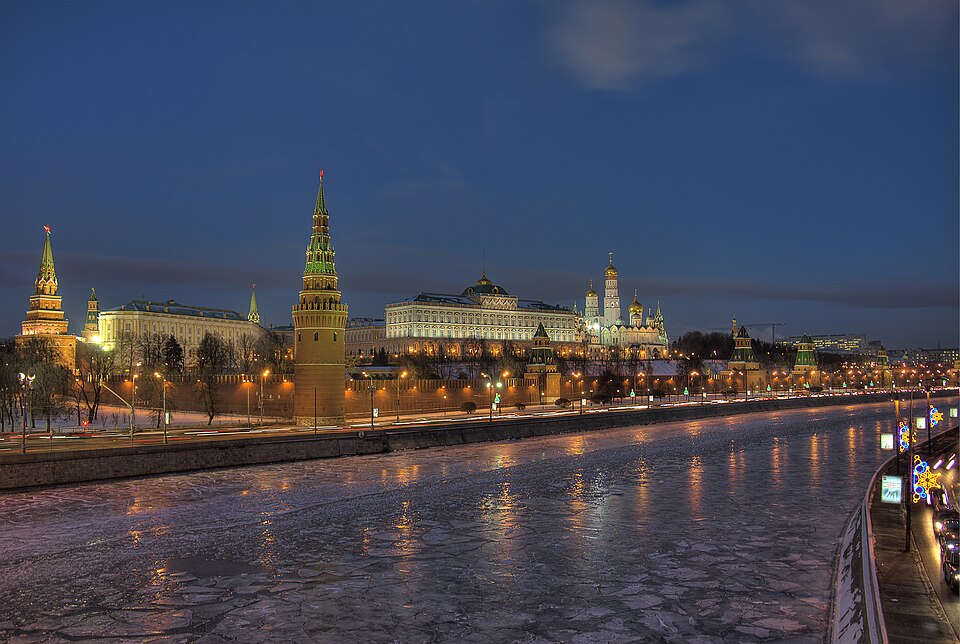
The Moscow Kremlin. In March 2026, the Kremlin confirmed that Ukraine peace talks had been placed on an indefinite "situational pause" as the Iran war diverted US diplomatic resources — a pause that simultaneously coincided with Russia receiving a massive oil revenue windfall from the Hormuz crisis.
Diplomatic EscalationFeb 28 – Apr 27, 2026Key moment

Russia Bids to Take Iran's Enriched Uranium as Araghchi Arrives in Moscow: From Covert Profiteer to Nuclear Dealbroker

Russia's response to the 2026 Iran war evolved from covert opportunism to open diplomatic ambition in the space of 59 days. In the war's opening hours, Moscow condemned the February 28 US-Israeli strikes on Iran as "armed aggression" and called for an emergency UN Security Council session — the public posture of a permanent member invoking international law norms. Behind that posture, a different calculation was operating. Moscow's intelligence services had been sharing Iranian assessments on US military positions with Tehran — cooperation described as a continuation of the two countries' defence relationship formalised in their October 2025 Comprehensive Strategic Partnership treaty. Moscow reportedly offered to end that intelligence-sharing arrangement in exchange for the United States halting military assistance to Ukraine — a proposed trade that would convert the Iran war into leverage for Russia's primary strategic priority. Washington rejected the offer without public acknowledgement. The economic windfall from the Hormuz closure required no such negotiation. The disruption of global oil supply roughly doubled Russia's oil revenues by an estimated $150 million per day, as global buyers turned to alternative supplies and the gap between Brent crude and Russian ESPO blend narrowed in Russia's favour. Trump, seeking to manage domestic gasoline prices, quietly lifted some Russian oil sanctions to allow Moscow to supply European and Asian markets with additional crude — a concession that generated minimal public controversy because it was framed as an energy stability measure. Moscow also supplied Chinese refineries with replacement crude as Iranian barrels were cut off by the blockade. Ukraine ceasefire talks, the centrepiece of Trump's first-term diplomatic ambitions, went into indefinite "situational pause" as Washington's bandwidth was consumed by the Iran crisis — a pause that suited Moscow's strategic objectives entirely.

RussiaKremlinAlexei LikhachevRosatomRussian Foreign Intelligence ServiceSergey LavrovKirill DmitrievAbbas AraghchiVladimir Putin
Read full analysis
The seal of the United States Senate, which voted 47-52 on April 15, 2026 to reject — for the fourth time — a Democratic war powers resolution that would have required Congressional authorization for Trump's Iran war.
Legal ManeuverFeb 28 – Apr 15, 2026

Senate Blocks Iran War Powers Resolution Four Times, Ceding Congressional Authority to Trump

When President Trump ordered the US military to strike Iran's nuclear and military infrastructure on February 28, 2026, he did so without requesting a declaration of war from Congress, without seeking an Authorization for Use of Military Force, and without formally notifying congressional leadership under the War Powers Resolution of 1973 before the strikes commenced. Senate Democrats responded by introducing War Powers Resolutions demanding that Trump withdraw US forces from Iran within 60 days under the WPR's mandatory clock provision. The first resolution failed in February; successive votes were held through mid-April, each defeated by the Republican Senate majority. The most recent vote, on April 15, failed 47-52, with Republicans voting as a bloc to sustain the president's war-making authority. The vote pattern across all four resolutions had one consistent exception on the Republican side: Senator Rand Paul of Kentucky, whose libertarian constitutionalist position had led him to oppose executive war-making under presidents of both parties, joined Democrats in each vote. On the Democratic side, the consistent exception was Senator John Fetterman of Pennsylvania, who supported Trump's Iran policy as a matter of foreign policy conviction, becoming the lone Democrat to vote with the Republican majority in favour of continuing military operations. Senator Susan Collins of Maine privately expressed concern about the conflict's trajectory but declined to break with the Republican caucus on any of the four votes, a choice that reflected the political difficulty of crossing a wartime president from within his own party even for a senator with a long history of independence.

United StatesUS Senate DemocratsSenate RepublicansSenator Rand PaulSenator Tammy Duckworth
Read full analysis
January 2026
Iranian protesters in the streets, with the government shutting down internet access in January 2026 to suppress the growing unrest.
Domestic CrackdownJan 8 – Jan 15, 2026De-escalation

Iran Cuts Internet to Suppress Nationwide Antigovernment Protests

The protests that broke out across Iran in the first weeks of January 2026 drew on accumulated grievances that had been building since the Twelve-Day War of June 2025, in which Israeli and US strikes had damaged significant portions of Iran's military and nuclear infrastructure, and the months of economic deterioration that followed. The ceasefire of June 24, 2025 had ended the immediate military exchange but had not restored the economic conditions preceding it: international sanctions imposed or tightened during and after the Twelve-Day War had further constricted Iran's oil export revenues, the rial had continued depreciating, and unemployment in provinces directly affected by strike damage had spiked. The specific trigger for January's unrest was a combination of a mid-winter energy crisis — power outages affecting millions of households as Iran's already-strained electricity grid failed to meet winter demand — and the release of casualty figures from the Twelve-Day War that official channels had suppressed during the conflict itself. Families who had lost relatives in the strikes, who had been displaced from provinces near targeted facilities, and who had spent the subsequent months watching the government claim a kind of retroactive victory in negotiations that had produced no tangible improvement in their daily circumstances began gathering publicly in cities including Tehran, Isfahan, Mashhad, Tabriz, and Ahvaz. The grief was not abstract: it was specific, named, and directed at a government whose decisions had produced the Twelve-Day War and whose diplomatic management of its aftermath had left ordinary Iranians bearing its costs while the IRGC consolidated political authority.

IranIranian GovernmentMinistry of Information and Communications Technology
Read full analysis
June 2025
Iran's Natanz nuclear enrichment facility, targeted by Israeli and later US airstrikes during the June 2025 Twelve-Day War.
Military ThreatJun 13 – Jun 24, 2025Key moment

The Twelve-Day War: Israel and US Strike Iran's Nuclear Programme to Ceasefire

The Israeli decision to launch the Twelve-Day War on June 13, 2025 emerged from a convergence of intelligence assessments and political conditions that the Netanyahu government judged to be closing. By mid-2025, Israeli and Western intelligence services assessed that Iran had accumulated sufficient highly enriched uranium to produce multiple nuclear devices, and that the technical gap between enriched material and deliverable weapons had narrowed to a period measured in weeks rather than months. The diplomatic track that had been pursued through European intermediaries since the collapse of the JCPOA had produced no verifiable constraints on enrichment, and the Israeli government had concluded — after the October 2024 exchange, in which Israeli aircraft had struck inside Iran proper for the first time and received a measured rather than overwhelming response — that a window existed for a more comprehensive degradation campaign before Iran had crossed what Israeli planners termed "the final threshold." The June 13 strikes were large-scale and simultaneous across multiple target categories: nuclear enrichment infrastructure at Natanz, Fordow, and the Isfahan conversion facility; ballistic missile production and storage facilities whose continued operation had enabled the October 2024 barrage; air defence networks protecting nuclear sites; and IRGC command and logistics infrastructure supporting the nuclear programme. The operation used bunker-penetrating munitions developed specifically for hardened underground facilities and drew on years of accumulated intelligence about facility layouts and hardening specifications. Iran responded with successive ballistic missile salvos targeting Israeli cities and military bases, producing civilian casualties in Israel and triggering the Iron Dome and Arrow systems to their highest operational tempo in the conflict's first days.

IsraelIsraeli Air ForceUS MilitaryIRGC
Read full analysis
October 2024
Israel's air defense systems intercepting projectiles during Iran's second direct missile barrage in October 2024.
Military ThreatOct 1 – Oct 26, 2024ContinuationKey moment

Iran Fires 180 Ballistic Missiles at Israel; Israel Strikes Back at Iranian Soil

The six months between Iran's first direct strike on Israel in April 2024 and its second in October 2024 were defined by a sequence of escalations that made a second Iranian attack not merely plausible but, in the IRGC's strategic calculus, obligatory. In July 2024, Hezbollah's military commander Fuad Shukr was killed by an Israeli strike in Beirut; within hours, Hamas political leader Ismail Haniyeh was assassinated in Tehran itself — an operation conducted inside the Iranian capital that constituted a profound intelligence and security failure whose domestic political consequences demanded a response. In August and September, Israeli operations in Lebanon intensified: the assassination of Hezbollah Secretary-General Hassan Nasrallah on September 27 removed Iran's most important and longest-serving proxy partner and decapitated the organisation that had constituted the western pillar of Iran's deterrence architecture. Nasrallah's death was not merely the loss of an ally — it was an operational demonstration that Israel was systematically eliminating the network of deterrent threats Iran had spent decades constructing around its borders. The IRGC's internal logic was clear: every unanswered Israeli escalation made the next one more likely and degraded Iran's reputation as a power whose retaliation threats carried credible weight. The October 1 attack was framed by Tehran as Operation True Promise II — a direct successor to April's True Promise I — and designed as a deliberate demonstration of capability improvement over the first strike.

IranIRGCIranian Armed Forces
Read full analysis
April 2024
The destroyed Iranian consular annex in Damascus following Israeli airstrikes on April 1, 2024.
Military ThreatApr 1 – Apr 13, 2024ContinuationKey moment

Iran Breaks 45 Years of Shadow War, Launches First Direct Strike on Israel

Israel's bombing of Iran's consular annexe in the Mezzeh district of Damascus on April 1, 2024 was not an isolated provocation but a culminating point in an Israeli campaign to degrade IRGC command networks operating from Syrian territory. The April 1 strike killed seven IRGC officers, among them Brigadier General Mohammed Reza Zahedi — the most senior IRGC commander killed in a single Israeli strike since the beginning of the Syrian conflict — and Brigadier General Mohammed Hadi Haji Rahimi, his deputy. Zahedi was the IRGC Quds Force commander responsible for Syria and Lebanon, the officer most directly responsible for coordinating weapons transfers from Iran through Syria to Hezbollah. His death was a significant operational loss that Israel intended as a signal about the cost of continued IRGC operations in Syria. The strike on a building operating under diplomatic protection — the consular annexe adjoined the Iranian embassy — crossed a precedent that Iran's leadership assessed could not pass without a proportionate response. Under international law, consular premises carry the same inviolability protections as embassy buildings; striking them was an act that Iran's Supreme Leader and foreign ministry framed as requiring a sovereign military response rather than the proxy escalation Iran had employed in every prior escalation cycle since the Islamic Revolution. The domestic pressure on Khamenei's government to respond directly was substantial: a regime that claimed resistance to Israel as a founding principle of its foreign policy could not absorb the killing of two generals in a diplomatic building without demonstrating that the killing had a deterrent cost.

IranIRGCIranian Supreme Leader
Read full analysis
January 2020
Major General Qassem Soleimani, commander of Iran's Quds Force, killed in a US drone strike near Baghdad airport on January 3, 2020.
Military ThreatJan 3 – Jan 8, 2020Key moment

Iran Strikes Back: Ballistic Missiles on US Bases After Soleimani Killing

General Qassem Soleimani was not simply a military commander when he was killed by a US drone strike at Baghdad International Airport on January 3, 2020: he was the architect and operational manager of Iran's entire regional proxy network, the most consequential military figure the Islamic Republic had produced since the Iran-Iraq War, and the person most personally responsible for converting the IRGC Quds Force from a regional arm of Iranian foreign policy into the most capable non-state military network in the Middle East. Under Soleimani's command since 1998, the Quds Force had cultivated, armed, funded, and operationally directed Hezbollah in Lebanon, Hamas and Palestinian Islamic Jihad in Gaza, the Popular Mobilisation Forces in Iraq, the Houthis in Yemen, and militia networks in Syria that had been decisive in keeping Bashar al-Assad's government in power through the Syrian civil war. Soleimani had survived multiple assassination attempts and had operated openly in Iraq and Syria for years with a visibility unusual for a covert operations commander — he appeared in front-line photographs alongside IRGC-supported militias, was photographed in Aleppo during Syrian operations, and had been sanctioned by the United States Treasury since 2011 without the designation translating into a kinetic targeting decision by the Obama or Trump administrations until the night of January 3. The Trump administration justified the assassination on the grounds of an "imminent threat" to American diplomatic facilities and personnel in Iraq, but the strike also killed Abu Mahdi al-Muhandis, deputy commander of Iraq's Popular Mobilisation Forces and a key link in the Quds Force's Iraqi network — a pairing that left no ambiguity about the operation's breadth of target set.

IranIRGCIranian Supreme Leader
Read full analysis